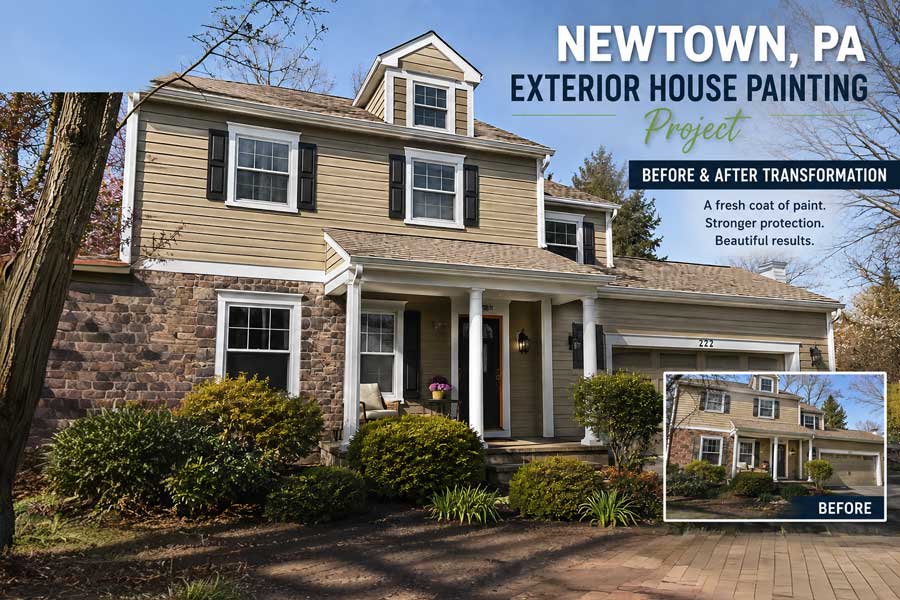


First Time Painting a House Exterior: A Complete Guide
A quality exterior paint job protects your home for 10 or more years and boosts curb appeal. A poor one leads to peeling, bubbling, and a costly redo within a few seasons. The difference almost always comes down to preparation and technique — not the paint itself.
This guide covers everything a first-timer needs to know: prep work, materials, weather windows, painting steps, and when to call a pro.
Step 1: Prepare the Surface
Professional painters agree — prep work is where the exterior painting project is won or lost. Paint doesn’t hide problems. It reveals them.
Pressure wash the exterior
Start by pressure washing every surface you plan to paint. This removes dirt, mildew, algae, and old paint chalk that blocks adhesion. Use a 1,500–2,500 PSI washer with a 25-degree tip. Hold the nozzle 12–18 inches from the surface and work top to bottom.
Let the surface dry fully before moving on — plan for 24 to 48 hours. Painting over damp wood siding is one of the most common first-timer mistakes and a leading cause of early failure.
Repair damaged areas
Fix every defect before you open a can of paint:
- Cracked or rotted wood: Fill with exterior wood filler or replace damaged boards. Paint cannot fix structural damage.
- Failing caulk: Pull out cracked caulk around windows, doors, and siding joints. Replace it with a paintable, flexible acrylic caulk.
- Loose siding: Renail or re-secure any loose boards. Paint won’t hold on an unstable surface.
Skipping repairs is the fastest way to ruin an exterior paint job.
Scrape loose and peeling paint
Remove any paint that isn’t firmly bonded to the surface. Use a pull scraper on flat areas and a detail scraper on trim. Sand the edges of scraped spots with 80–100 grit sandpaper so ridges don’t show through the new coat.
If your home was built before 1978, have it tested for lead paint first. Disturbing lead paint requires EPA-certified containment and disposal. Hire a certified contractor if you’re unsure.
Apply exterior wood primer to bare surfaces
Any bare wood, patched spot, or repaired area needs a coat of exterior wood primer before you paint. Paint primer does two things: it seals the surface so the topcoat goes on evenly, and it gives the paint something to grip.
Use a quality exterior wood primer on bare wood. Use a masonry or metal primer on those substrates. Don’t skip this step — unpainted bare surfaces cause the topcoat to peel.
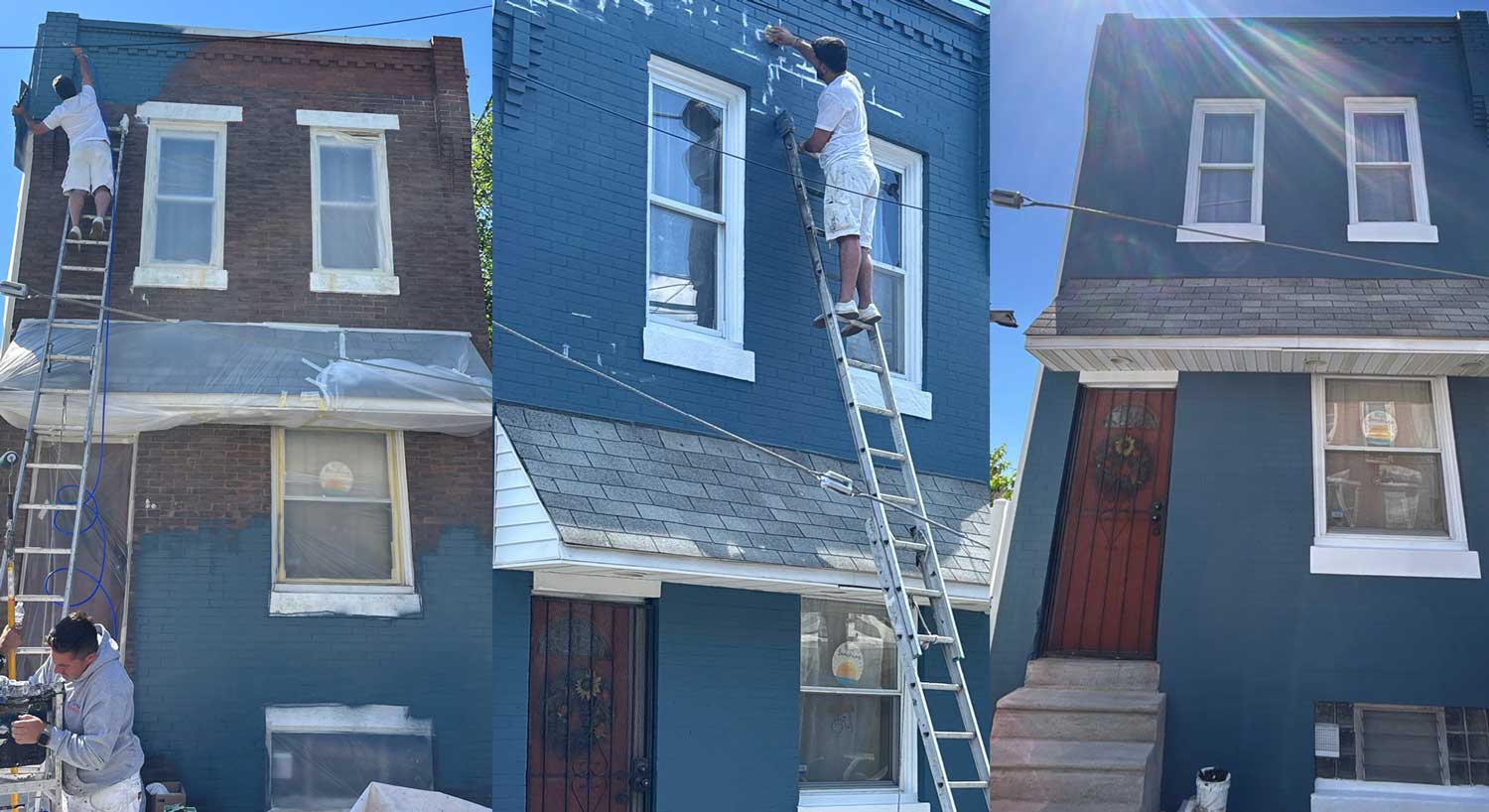
Step 2: Choose the Right Paint
Use 100% acrylic latex exterior paint
For exterior house painting, 100% acrylic latex exterior paint is the correct choice for nearly every home. It outperforms cheaper options because:
- It flexes: Acrylic paint moves with the surface as temperatures rise and fall. This prevents cracking — a real issue in Philadelphia, where winters are cold and summers top 90°F.
- It breathes: Latex paint lets trapped moisture escape instead of pushing the paint off the wall.
- It lasts: Quality acrylic formulas hold their paint color and sheen far longer than alkyd or bargain latex paints.
- It resists mildew: Premium exterior paints include mildewcide additives — important in the humid Mid-Atlantic region.
Quality exterior paint runs $50–$80 per gallon, versus $20–$35 for budget options. The price difference is real. So is the payoff: a quality acrylic job lasts 10–15 years. A budget paint job in the same conditions may start failing in 3–5.
Learn more about the painting costs in our blog article here How Much Does It Cost to Paint a House in Philadelphia? [2026 Guide].
Sheen tip: Use flat or low-sheen paint on siding. Use satin or semi-gloss on trim, doors, and shutters — it holds up better to handling and cleaning.
Top-performing brands for the Mid-Atlantic climate include Sherwin-Williams Emerald Exterior, Benjamin Moore Aura Exterior, and Behr Marquee Exterior.
Step 3: Pick the Right Weather Window
Weather determines whether your paint sticks, cures, and lasts. It’s not just a comfort issue.
Ideal conditions for exterior painting
- Temperature: 50°F to 85°F. Below 50°F, paint won’t form a proper film. Above 85°F, it dries too fast and leaves brush marks.
- Humidity: Below 85%. High humidity slows drying, causes lap marks, and can blister fresh paint.
- No rain: Don’t paint within 24 hours of expected rain. A rain shower on fresh paint will ruin the finish.
- Avoid direct midday sun: Sun bakes the paint before it can level out, locking in brush and roller texture. Follow the shade around the house as you work.
Best time to paint in the Philadelphia area
The best windows are late April through early June and September through mid-October. Temperatures are mild, humidity is manageable, and dry stretches are reliable. Midsummer is workable if you start early in the morning before heat peaks. Avoid winter — most exterior paints can’t be applied below 50°F.
Step 4: Apply the Paint
How many coats does exterior paint need?
Two coats is the professional standard. You may need three coats if you’re covering a very dark color with a light one, painting bare or heavily weathered wood siding, or making a dramatic paint color change.
Never apply one thick coat to skip a step. Thick paint runs, sags, and cures poorly.
How long should each coat dry before recoating?
Let each coat dry at least 4 hours under ideal conditions — 70°F and low humidity. In cooler or humid weather, wait 6–8 hours. The surface should feel completely dry and leave no fingerprint impression before you recoat.
Recoating too soon is a top cause of exterior painting failure.
Paint in this order
Work top to bottom to keep drips off finished areas:
- Soffits and fascia — start at the roofline
- Siding — work in sections, keeping a wet edge to avoid lap marks
- Trim, windows, and doors — finish with detail work last
Use a brush for trim and cut-in areas. Use a roller — 3/8″ nap for smooth siding, 1/2″ for rough or textured surfaces — for large flat areas. A paint sprayer speeds up big exterior painting projects but takes practice and careful masking to use well.
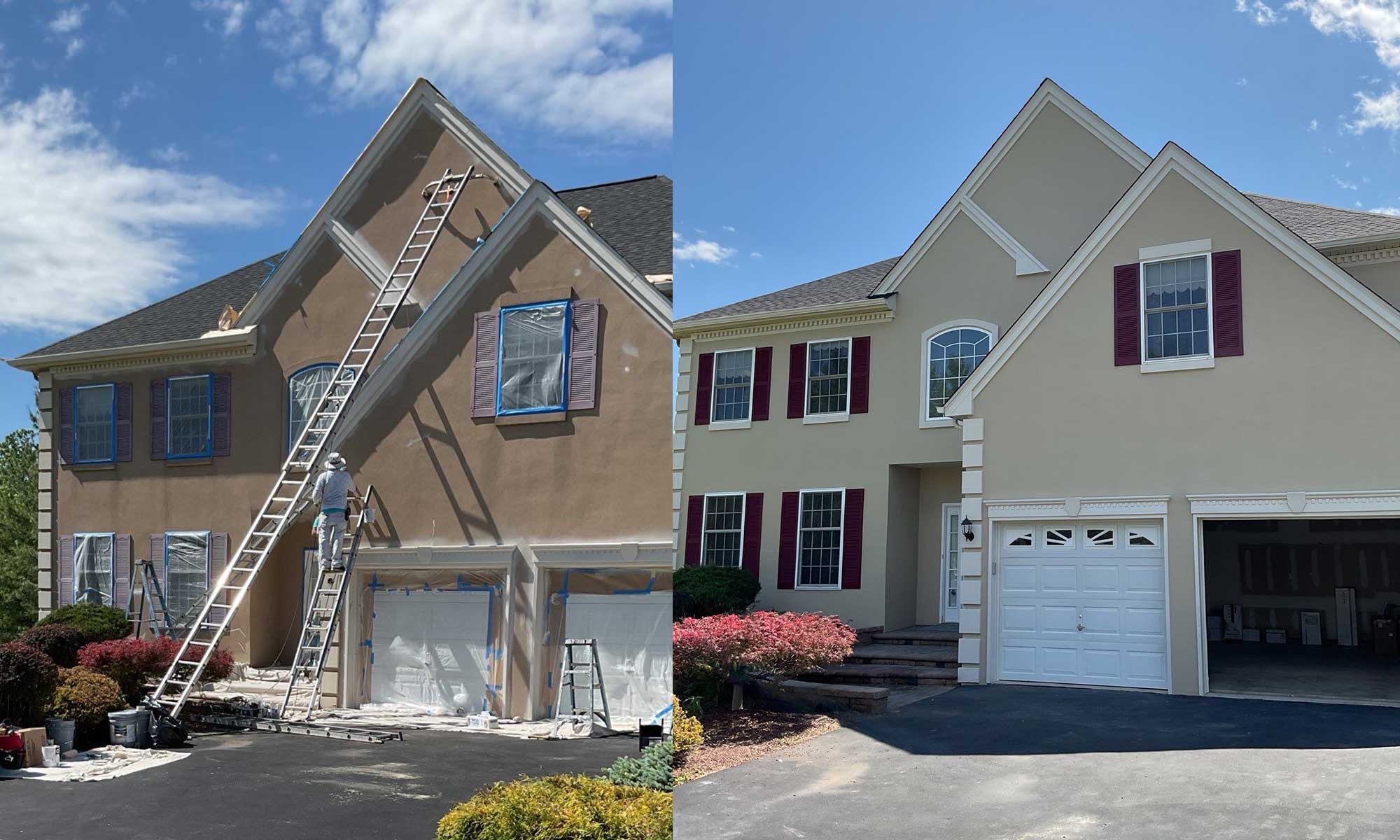
Frequently Asked Questions
How long does it take to paint the exterior of a house yourself? Plan 3–5 days for an experienced DIYer on a typical two-story home. Budget a full week or more for a first exterior painting project, especially if repairs are needed.
Do I need to prime the whole house or just bare spots? Spot-prime bare and repaired areas when the existing paint is in good shape. Apply a full prime coat when the surface is heavily chalked, weathered, or when you’re making a big color change.
Can I paint the exterior of a house in the rain? No. Never apply paint to a wet surface or within 24 hours of rain. Moisture stops the paint from bonding and will cause early failure.
How often does a house exterior need to be repainted? With quality paint and proper prep work, expect 10–15 years in the Philadelphia area. Wood siding may need attention sooner. Fiber cement and engineered siding hold paint longer.
What does an exterior painting estimate include? A professional exterior painting estimate covers surface prep, priming, number of coats, materials, and labor. Always get a written scope before any work begins.
When to Hire Professional Painters
An exterior painting project involves pressure washing, repairs, lead paint considerations, ladder safety, priming, and multiple coats. It’s a real commitment. For two-story homes, steep rooflines, or any home with lead paint, hiring professional painters is the smarter call.
At Groovy Hues Painting of Philadelphia, we manage every step of the exterior paint job — from prep through final coat. We use high-quality paints and proven technique to deliver a finish that protects and looks great for years.
Contact us for a free exterior painting estimate. No obligation — just an honest assessment of what your home needs.
Groovy Hues Painting of Philadelphia | Professional Interior & Exterior Painting Services
![Exterior Painting Cost in Philadelphia: What Homeowners Should Budget [2026]](https://www.groovyhues.com/philadelphia-pa/wp-content/uploads/sites/2/2026/07/exterior-painting-cost-philadelphia-2026-guide.jpg)
![How Much Does It Cost to Paint a House in Philadelphia? [2026 Guide]](https://www.groovyhues.com/philadelphia-pa/wp-content/uploads/sites/2/2026/06/how-much-does-it-cost-to-paint-a-house-in-philadelphia-2026-guide.jpg)