




Commercial Painting for Interior, Exterior, and Maintenance Projects
Commercial properties need paint that looks professional, protects surfaces, and fits around the way the building is used. Groovy Hues Painting of Philadelphia helps businesses, property managers, facility teams, and commercial property owners plan interior, exterior, and maintenance painting around the property, the surfaces involved, and the result they want to achieve.
Commercial Painting at a Glance
- Interior and exterior commercial painting
- Preparation, repairs, priming, and coating selection
- Planning for occupied and active properties
- Commercial color and finish guidance
- Site-specific estimates based on the actual scope
Commercial painting scope
Commercial Painting for Businesses and Managed Properties
A commercial painting project has to work for the property and for the people who use it every day.
You may be updating a customer-facing space, preparing a property for a new tenant, refreshing common areas, repainting after repairs, or bringing several locations into a more consistent look. Commercial painting can range from a focused maintenance project to a full interior, exterior, or combined repaint.
Groovy Hues works with business owners, property managers, facility managers, landlords, associations, contractors, and other decision-makers who need a clear painting scope without losing sight of access, operating hours, traffic, or surface condition.
The right plan starts with what is happening at the property now. We look at the areas you want to change, the surfaces involved, the condition of the existing coating, and the practical details that can affect preparation and scheduling.
Interior and exterior commercial painting
Interior and Exterior Commercial Painting Services
Commercial interior and exterior painting share the same need for sound preparation, but the surfaces and conditions are different. Interior projects often need to account for traffic, cleaning, ventilation, and occupied spaces. Exterior projects add weather, moisture, access, substrate exposure, and suitable application conditions.
Commercial Interior Painting
Commercial interior painting covers customer-facing areas, offices, corridors, lobbies, treatment rooms, common areas, back-of-house spaces, and other interiors where appearance and day-to-day use both matter.
- Walls, ceilings, trim, doors, frames, and architectural woodwork
- Drywall, plaster, masonry, concrete, and interior metal surfaces
- High-traffic and frequently cleaned areas
- Tenant-improvement, turnover, and maintenance painting
Commercial Exterior Painting
Commercial exterior painting focuses on façades, storefront exteriors, masonry, stucco, concrete, wood, metal, siding, trim, doors, railings, and other weather-exposed painted elements.
- Faded, peeling, chalking, cracked, or weathered coatings
- Exterior cleaning, scraping, sanding, caulking, patching, and priming
- Weather-exposed coating systems and corrosion-prone surfaces
- Exterior maintenance and historic-property considerations
Commercial property types
Commercial Properties and Facilities We Paint
Property type changes the way a painting project is planned. A retail space may need careful customer routing, a healthcare setting may place more emphasis on occupied-space coordination, and a warehouse may bring larger surfaces, access equipment, or industrial-use areas into the scope. Surface condition, access, and how a property is used can shape the planning for both commercial projects and residential painting.
Repainting and maintenance
When Commercial Properties Need Repainting or Maintenance Painting
Commercial painting is not always driven by the same problem. Some projects begin because the existing coating is failing. Others start because the property, tenant, brand, or use of the space has changed.
Wear and Surface Damage
Scuffs, chips, scratches, stains, cracking, peeling, and repeated cleaning can leave high-use areas looking tired before the rest of the property.
Color and Brand Changes
New branding, tenant turnover, renovations, or an updated customer experience can create a reason to change colors even when the existing coating is still sound.
Exterior Weathering
Fading, chalking, moisture exposure, rust, failed caulking, and weathered coatings can signal that exterior painted surfaces need attention.
Property Turnover or Reopening
Leasing, sale preparation, tenant improvements, remodeling, inspections, or reopening can create a deadline for a cleaner and more consistent finish.
Commercial painting substrates
Commercial Surfaces and Substrates
Commercial properties often combine several paintable materials within the same project. The substrate matters because preparation, primer choice, coating compatibility, and long-term performance can change from one surface to another.
Interior Wall and Ceiling Surfaces
Drywall, plaster, block, masonry, and previously coated walls can each show different wear, repairs, or adhesion issues before repainting begins.
Wood, Doors, Trim, and Metal
Architectural woodwork, doors, frames, railings, steel, galvanized metal, and aluminum may need different cleaning, sanding, priming, or corrosion-control steps.
Exterior Masonry and Building Surfaces
Brick, concrete, block, stucco, siding, and other exterior materials have their own moisture, weathering, and coating-compatibility relationships.
Commercial surface preparation
Surface Preparation Before Commercial Painting
Paint performs best when the surface beneath it is clean, sound, dry, and ready for the coating system being applied. Preparation is therefore part of the commercial painting scope, not an afterthought once color has been chosen.
1. Assess and Protect
We identify the surfaces being painted, review visible coating failures or repairs, and protect nearby floors, fixtures, furniture, equipment, and work areas as the scope requires.
2. Clean and Remove Loose Material
Preparation may include cleaning, scraping, or removing loose paint, dust, grease, residue, chalking, or other material that can interfere with adhesion.
3. Sand, Patch, and Repair
Minor patching, sanding, caulking, and repair work can help create a more stable and consistent surface before primer or finish coats are applied.
4. Prime Where Needed
Bare areas, repairs, stains, color changes, porous materials, or difficult substrates may call for a compatible primer before the finish system goes on.
Commercial paints and finishes
Commercial Paints, Coatings and Finish Selection
A commercial finish has to make sense for the surface and the way the property is used. Durability, washability, sheen, stain resistance, odor, traffic, weather exposure, and coating compatibility can all influence the final selection.
Durability and Cleaning
Busy interiors may need finishes that stand up better to repeated contact, cleaning, and high traffic. The right choice depends on the room, surface, and maintenance routine.
Sheen and Appearance
Flat, matte, eggshell, satin, semi-gloss, and other finish levels affect both appearance and practical performance. Different surfaces within the same property may need different sheens.
Weather and Surface Protection
Exterior coatings may need to respond to moisture, UV exposure, temperature change, corrosion, and the movement or porosity of the substrate beneath them.
If color decisions are part of your project, Groovy Hues includes a professional color consultation with qualifying signed painting projects. The consultation is an add-on to the painting project rather than a standalone bookable service.
Occupied-property planning
Commercial Painting for Occupied and Active Properties
Painting an active commercial property requires more than choosing a start date. People may still need to enter the building, work in nearby areas, receive deliveries, meet customers, or move between shared spaces while the project is underway.
We can plan the scope around the way your property operates, using practical work zones and sequencing so each phase has a clear place in the overall project.
- Phased work and work-zone sequencing
- Operating-hour and access considerations
- Entrances, deliveries, customers, tenants, and employees
- Furniture, equipment, floor, and fixture protection
- Ventilation, containment, and daily cleanup where needed
- Communication as the project moves from area to area
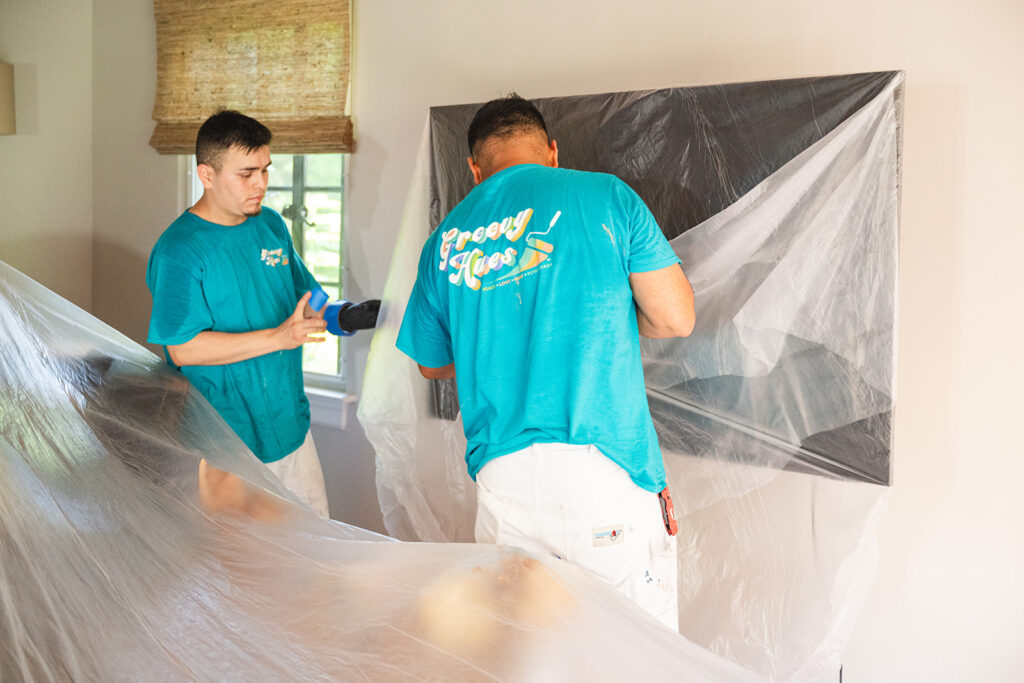
Commercial painting process
Our Commercial Painting Process
A clear process helps you understand what has been included, what needs to happen before painting starts, and how the project moves toward the final walkthrough.
1. Consultation and Estimate
Tell us what needs attention, how the property is used, and what you want to change. We use that information to start defining the scope.
2. Assessment and Planning
We review the paintable surfaces, existing condition, access, preparation needs, and scheduling requirements so the project has a practical plan.
3. Protection and Preparation
The work moves into protection, cleaning, repairs, sanding, caulking, or priming where those steps are part of the approved scope.
4. Painting and Quality Review
We apply the selected coating system and review completed areas as the project progresses, including touch-ups that fall within the agreed work.
5. Cleanup and Walkthrough
After the painting is complete, project materials are removed, the work area is cleaned, and we walk through the finished scope with you.
Commercial painting estimates
Commercial Painting Cost Factors
Commercial painting costs depend on the actual work required at the property, not square footage alone.
Two properties of similar size can have very different scopes if one needs extensive preparation, repairs, elevated access, multiple colors, specialty coatings, or phased work around an occupied building.
A site-specific estimate gives you a clearer picture of what is included and which project conditions are affecting the scope.
Commercial painting schedules
Commercial Painting Timelines and Project Sequencing
Project timing depends on the amount of preparation, the size of the paintable area, drying and recoat requirements, access, occupancy, and whether the work needs to move through the property in phases.
Preparation and Repairs
Cleaning, repairs, sanding, priming, and drying can add time before finish coats begin, especially when the existing surfaces need more than a straightforward repaint.
Phasing and Occupancy
Active properties may be divided into work zones so employees, tenants, customers, or operations can continue in other areas while painting progresses.
Exterior Conditions
Exterior work also depends on weather and product application requirements. Rain, temperature, humidity, dew, and drying conditions can affect when a coating can be applied.

Commercial coating lifecycle
Commercial Maintenance Painting and Coating Life
Maintenance painting can help keep high-wear areas from becoming full-scale repainting projects too soon.
Commercial coatings do not wear at the same rate everywhere. Corridors, entrances, customer-facing areas, frequently cleaned surfaces, sun-exposed façades, and moisture-prone exterior areas may show wear sooner than protected or low-use surfaces.
Planned touch-ups and maintenance painting can focus attention where it is needed most. Cleaning methods, moisture control, early repairs, exposure, traffic, and the original coating system all affect how long a finish continues to look and perform well.
Keeping records of colors, products, and repaired areas can also make future maintenance easier, especially for property managers responsible for several spaces or locations.

Philadelphia property considerations
Commercial Painting for Older and Historic Philadelphia Properties
Older and historic commercial properties can bring mixed substrates, previous coating layers, masonry, repairs, or review requirements into a painting project. Those issues matter when they change how the surface needs to be prepared or whether work can proceed as a standard repaint.
Older Coatings and Mixed Substrates
Plaster, masonry, wood, metal, repaired areas, and several generations of paint can exist within the same building. A surface assessment helps separate sound areas from those that need additional preparation before repainting.
Historic Façades and Designated Interiors
Properties on the Philadelphia Register of Historic Places can have review requirements for certain exterior changes, masonry work, and specifically designated interiors. The scope needs to reflect whether the work is ordinary maintenance or an alteration that requires additional review.
Pre-1978 Child-Occupied Facilities
EPA Renovation, Repair and Painting requirements can apply to qualifying child-occupied facilities in public or commercial buildings constructed before 1978 when renovation work disturbs painted surfaces. That relationship depends on the property use and the work being performed.
Local commercial painters
Commercial Painting Service Areas Around Philadelphia
Check whether your property falls within our current service area before you plan your project.
View All Service Areas
Related residential painting services
Related Residential Painting Services
Groovy Hues also paints residential interiors and exteriors throughout the local service area.
Residential Interior Painting
Groovy Hues paints walls, ceilings, trim, doors, cabinets, and other interior surfaces, with preparation and finishes chosen for the room and surface condition.
Residential Exterior Painting
We prepare and paint siding, stucco, brick, wood, trim, doors, and other exterior surfaces, with coatings suited to the material and weather exposure.


Happy Clients & Colorful Experiences
"The Groovy Hues team exceeded my expectations, the job was completed in a timely manner, cleanly and with great attention to detail! I recommend Groovy Hues if you are looking to get your house painted."


Commercial Painting FAQs
-
Do you provide both commercial interior and exterior painting?
-
Can commercial painting be completed while my property stays open?
-
What surface preparation may be needed before commercial painting?
-
What affects the cost of commercial painting?
-
How long does a commercial painting project take?
-
Can you help with commercial paint colors and finishes?
-
How often should a commercial property be repainted?
-
What should owners of older or historic Philadelphia properties know before painting?


