




Residential Painting for Interior, Exterior, and Whole-Home Projects
A fresh paint project can change how a home feels inside, protect how it performs outside, or bring several updates together into one plan. Groovy Hues Painting of Philadelphia helps homeowners refresh interiors, protect exteriors, update dated colors, and plan whole-home painting around their surfaces and goals.
Residential Painting at a Glance
- Interior and exterior home painting
- Surface preparation, minor repairs, and priming
- Paint, finish, and color guidance
- Planning for occupied homes and daily routines
- Project-specific estimates based on your home and scope
Residential painting scope
Residential Painting for Home Refreshes, Repairs, Moves, and Renovations
A good painting plan starts with the home you have now and the way you want it to look, feel, and hold up afterward.
You may want to brighten a few rooms, repaint after repairs, update colors before moving in, prepare a home for sale, or tackle an interior and exterior refresh together. Residential painting can cover one focused area or several parts of the property in the same project.
Groovy Hues works with homeowners, landlords, sellers, buyers, and residential property owners who want a clear scope before work begins. We look at the surfaces involved, existing paint condition, preparation needs, access, color and finish goals, and the practical details that can affect how the project is sequenced.
The result should fit the home rather than force every property into the same approach. An older rowhome with plaster and wood trim can need different preparation from a newer home with drywall, while an exterior repaint brings weather exposure, access, and substrate condition into the decision.
Interior and exterior residential painting
Interior and Exterior Residential Painting Services
Interior and exterior residential painting solve different problems. Interior work centers on rooms, finishes, household use, and indoor surfaces. Exterior work adds façades, siding, masonry, weather exposure, moisture, and outdoor access.
Residential Interior Painting
Residential interior painting covers the rooms and surfaces you live with every day, from walls and ceilings to trim, doors, plaster, drywall, woodwork, and other paintable interior details.
- Living rooms, bedrooms, kitchens, bathrooms, hallways, and home offices
- Drywall, plaster, ceilings, trim, doors, and architectural woodwork
- Preparation after patches, repairs, wallpaper removal, or renovation work
- Finish choices for traffic, cleaning, moisture, and appearance
Residential Exterior Painting
Residential exterior painting covers weather-exposed parts of the home, including siding, brick, stucco, trim, doors, shutters, railings, decks, fences, and other exterior elements included in the project.
- Brick, masonry, stucco, concrete, wood, siding, and metal
- Trim, fascia, soffits, eaves, doors, shutters, and window frames
- Cleaning, scraping, sanding, caulking, patching, and priming
- Exterior color, weather, access, and maintenance factors
Homes and project types
Residential Property Types and Painting Projects
Residential painting can look very different from one property to the next. Layout, access, age, occupancy, and surface history all influence planning. Surface condition, access, and how a property is used can shape the planning for both residential projects and commercial painting services.
Repainting and maintenance triggers
When Homes Need Repainting or Maintenance Painting
A painting project may start because the finish is worn, because the home has changed, or because you want a different look. The reason matters because it affects the amount of preparation and the areas that belong in the scope.
Wear, Marks, and Surface Damage
Scuffs, stains, scratches, chips, patched areas, and ordinary household wear can make walls, trim, doors, and other surfaces look tired even when the rest of the room still feels current.
Color and Style Changes
Moving in, updating a room, changing furniture or finishes, or creating a more cohesive palette can make repainting useful even when the existing coating is still sound.
Exterior Weathering
Fading, chalking, peeling, cracking, failed caulk, moisture staining, or exposed substrate can signal that exterior painted surfaces need attention.
Repairs, Renovation, and Sale Preparation
Drywall patches, plaster repairs, carpentry, remodeling, tenant turnover, or getting a home ready for sale can create a natural point for repainting.
Residential painting substrates
Residential Surfaces and Substrates
Homes often combine several paintable materials in one project. The material matters because preparation, primer choice, coating compatibility, and the finished appearance can change from one surface to another.
Interior Walls and Ceilings
Drywall, plaster, plaster-on-lath, ceilings, patched areas, and previously painted surfaces can each need different preparation before a new finish is applied.
Trim, Doors, and Woodwork
Baseboards, molding, doors, frames, built-ins, and other woodwork bring detail, adhesion, existing finish, and sheen into the project.
Brick, Masonry, and Stucco
Interior or exterior masonry needs to be assessed for condition, previous coatings, moisture, porosity, and compatibility before repainting.
Siding and Exterior Components
Wood, fiber-cement, paintable vinyl or aluminum, metal, shutters, garage doors, decks, fences, railings, and similar elements can have different preparation and coating needs.
Previously Repaired Surfaces
Patches, filled holes, repaired cracks, stain-prone areas, and mixed old and new material can need spot priming or extra preparation so the finish looks consistent.
High-Touch and Frequently Cleaned Areas
Hallways, kitchens, bathrooms, doors, trim, and other high-use surfaces may need finish choices that balance appearance with cleanability and everyday wear.
Surface preparation
Surface Preparation and Minor Repairs Before Residential Painting
Preparation plays a major role in how even the finished paint looks and how well it holds up through everyday use and weather exposure.
1. Protect the Home
Scuffs, stains, scratches, chips, patched areas, and ordinary household wear can make walls, trim, doors, and other surfaces look tired even when the rest of the room still feels current.
2. Clean the Surface
Dirt, dust, grease, residue, mildew, or exterior buildup can interfere with adhesion. Exterior washing or power washing may be used as preparation when appropriate.
3. Correct Minor Surface Defects
Loose paint, rough edges, holes, dents, cracks, gaps, and suitable minor defects can be scraped, sanded, filled, patched, or caulked as the surface requires.
4. Prime Where Needed
Bare, repaired, stained, glossy, porous, or otherwise challenging areas may need primer before the finish coat is applied.
The exact preparation needed depends on what we find when we assess your home, including the condition of the surfaces, the existing coatings and the scope of the project.
Paint and finish decisions
Residential Primers, Paints, Coatings, and Finish Selection
The coating system should fit the surface and the way that part of the home is used. Primer can support adhesion, stain control, and coverage, while the finish coat needs to suit traffic, cleaning, moisture, light, and the appearance you want.
Primers and Adhesion
Bonding, stain-blocking, masonry, wood, metal, or spot primers may be useful when the substrate, repairs, stains, or existing coating call for additional preparation.
Interior Paint Systems
Interior walls, ceilings, trim, and doors can need different products and sheens depending on room use, touch frequency, cleaning, moisture, and the desired look.
Exterior Coating Systems
Exterior paints and coatings need to match the substrate, existing finish, exposure, and suitable application conditions for the work being completed.
Flat and Matte Finishes
Lower-sheen finishes can soften light reflection and help reduce the appearance of some surface irregularities.
Eggshell and Satin Finishes
These finishes can offer a balance of appearance and cleanability for many residential spaces, depending on the product and room.
Semi-Gloss and Higher Sheens
Higher-sheen finishes are often selected for trim, doors, and other areas where definition, cleaning, or repeated contact matters.
Residential paint colors
Residential Paint Colors and Color Selection
The best color choice has to work with the light, architecture, fixed finishes, and adjoining spaces already in your home.
Interior color can shift throughout the day as natural and artificial light changes. Flooring, cabinetry, counters, wood, stone, and adjoining rooms also influence how a color reads. Outside, brick, roofing, trim, shutters, doors, and the home’s architecture become part of the palette.
Testing samples in the actual space can make a big difference, especially when you are choosing between close shades or planning several connected rooms. Groovy Hues includes a professional color consultation with qualifying signed painting projects; it is an add-on to the painting project rather than a separately bookable service.
Occupied-home planning
Painting an Occupied Home: Protection, Access, and Daily Life
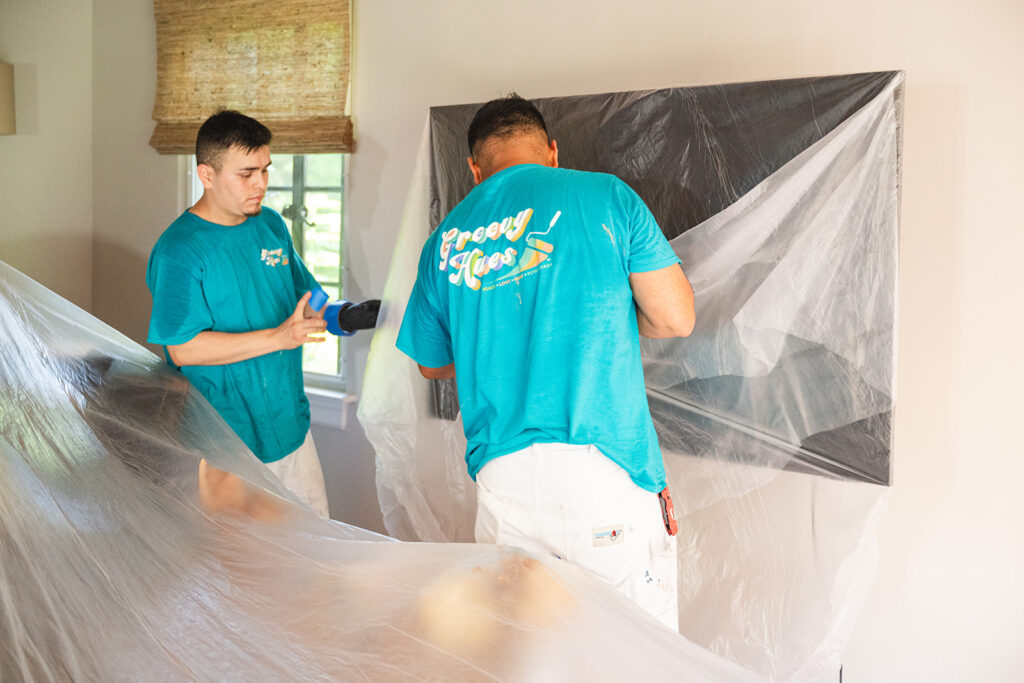
Painting does not happen in an empty diagram. It happens around furniture, bedrooms, kitchens, pets, children, work schedules, stairs, and the parts of the home you still need to use.
Furniture and Floor Protection
Furniture movement, coverings, floor protection, fixtures, and nearby surfaces are planned around the work area.
Room Sequencing
Multi-room projects can be sequenced so the household is not trying to manage every painted area at once.
Children, Pets, and Ventilation
Work zones, drying areas, ventilation, and household routines can be discussed before work begins so everyone knows what to expect.
Work-from-Home and Daily Access
Home offices, stairs, kitchens, bathrooms, entrances, deliveries, and other daily needs can affect the order in which areas are completed.
Exterior Access
Driveways, gates, porches, decks, landscaping, parking, and closely spaced homes can affect how exterior work is set up.
Daily Cleanup
Keeping work areas organized and cleaning up at the end of the day helps make a multi-day project easier to live around.
Residential painting process
Our Residential Painting Process
The exact scope changes from home to home, but a clear process helps you know what has been assessed, what is included, and what happens before the final walkthrough.
1. Consultation and Estimate
Tell us what you want to change. We review the areas involved, surface condition, access, and the practical details that shape the scope.
2. Color and Finish Planning
Colors, sheens, fixed finishes, and product needs are worked into the plan before painting begins.
3. Protection and Preparation
We protect the surrounding property and prepare the included surfaces according to their condition.
4. Painting and Detail Work
Paint is applied according to the project scope, followed by detail work, touch-ups, and inspection.
5. Cleanup and Final Walkthrough
Work areas are cleaned and the finished project is reviewed with you before closeout.
Residential painting estimates
Residential Painting Cost Factors
Your estimate should reflect your actual home, surfaces, preparation, and scope rather than a generic house-painting number.
The cost of residential painting can change with the size of the area, interior or exterior scope, ceiling height, number of elevations, surface condition, preparation, repairs, trim and detail work, access, and the paint or coating system selected.
Color changes can affect coverage, while doors, cabinets, railings, decks, fences, intricate trim, or other detailed elements add labor beyond simple wall area. Occupied-home protection, furniture movement, exterior height, staging, and weather can also affect the project plan.
A site-specific estimate gives you a clearer picture because it is based on what is actually being painted and what those surfaces need before the finish coat goes on.
Project duration and sequencing
Residential Painting Timelines and Project Sequencing
A single room, a multi-room interior, and a full exterior do not run on the same schedule. Duration depends on preparation, repairs, paintable area, detail work, drying and recoating requirements, access, occupancy, and exterior weather when outdoor work is involved.
Interior Scope
Room count, ceiling height, trim, doors, repairs, color changes, and whether the home is occupied can affect how quickly interior work progresses.
Exterior Scope
Home size, number of elevations, height, substrate condition, preparation, access, and weather can affect the exterior schedule.
Drying and Recoat Time
Products need the appropriate time between coats and before normal use resumes. Temperature, humidity, ventilation, and product requirements can affect that timing.
Project Sequencing
Whole-home projects can be organized around move-in dates, listing dates, renovation work, household routines, or the order in which rooms and exterior areas need to become available.
Paint maintenance
Residential Paint Maintenance and Repainting Lifecycle
Paint wears differently across a home, so maintenance works best when you watch the surfaces that receive the most traffic, cleaning, moisture, and weather exposure.
Interior hallways, doors, trim, kitchens, bathrooms, children’s spaces, and other high-touch areas may show wear sooner than low-use rooms. Outside, sun, moisture, temperature changes, failed caulk, rust, mildew, and exposed substrate can shorten the life of a finish.
Cleaning painted surfaces with methods suited to the coating, keeping leftover labeled paint for future touch-ups, and addressing leaks, moisture, rot, rust, or substrate movement before repainting can make future maintenance easier.
There is no single repainting interval that fits every home. Preparation, coating quality, substrate, exposure, household use, cleaning, and maintenance all affect how long the finish continues to look and perform well. Groovy Hues Painting of Philadelphia also provides a five-year limited workmanship warranty, subject to the published terms and exclusions.
Philadelphia housing context
Painting Older Philadelphia Homes, Rowhomes, and Pre-1978 Properties
Philadelphia has a large stock of older attached homes and rowhomes. Age alone does not determine the painting plan, but older construction can bring plaster, wood trim, previous repairs, layered coatings, masonry, compact access, or lead-safe requirements into the scope.
Rowhomes and Attached Homes
Narrow rooms, stairwells, shared walls, closely spaced exteriors, limited side access, stoops, porches, and street-facing façades can influence protection, setup, staging, and sequencing.
Plaster, Woodwork, and Older Surface Histories
Many older homes can contain plaster-on-lath, substantial wood trim, decorative plaster, solid-wood doors, previous repairs, wallpaper layers, and several generations of paint. Those conditions can change preparation and finish expectations.
Pre-1978 Homes and Lead-Safe Work
EPA Renovation, Repair and Painting requirements can apply when paid renovation work disturbs painted surfaces in qualifying pre-1978 housing. Scraping, sanding, and other preparation can make that relationship relevant to a painting project.
Historic Philadelphia Properties
Properties on the Philadelphia Register of Historic Places can have review requirements for certain exterior changes. Routine maintenance can be treated differently from alterations, and interior review applies only when the interior itself is designated.

Local house painters
Residential Painting Service Areas Around Philadelphia
Paint wears differently across a home, so maintenance works best when you watch the surfaces that receive the most traffic, cleaning, moisture, and weather exposure.
View All Service Areas
Related commercial painting services
Related Commercial Painting Services
Groovy Hues also handles interior and exterior painting for business and managed properties across the local service area.
Commercial Interior Painting
Commercial Interior Painting covers offices, retail spaces, restaurants, healthcare settings, common areas, and other business interiors with preparation and finishes suited to commercial use.
Commercial Exterior Painting
Commercial Exterior Painting covers façades, storefront exteriors, masonry, stucco, wood, metal, siding, trim, and other weather-exposed commercial surfaces.


Happy Clients & Colorful Experiences
"The Groovy Hues team exceeded my expectations, the job was completed in a timely manner, cleanly and with great attention to detail! I recommend Groovy Hues if you are looking to get your house painted."


Residential Painting FAQs
-
Can you paint while we are still living in the home?
-
Do you protect furniture, floors, and nearby surfaces?
-
Can you paint plaster, brick, stucco, siding, trim, and doors?
-
What affects the cost of residential painting?
-
What if my home was built before 1978?
-
How does weather affect exterior house painting?
-
Can you help with paint colors?
-
How often should a home be repainted?


