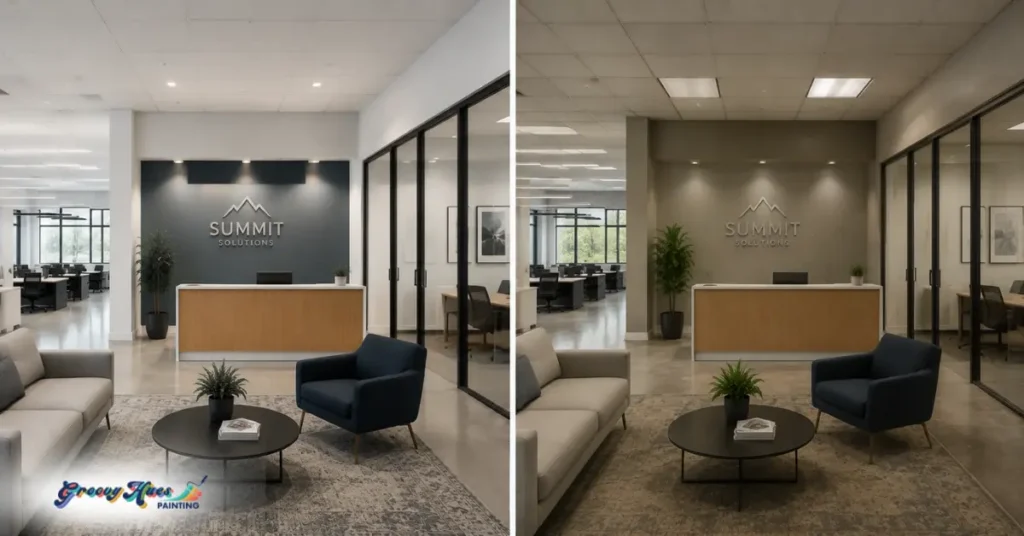


How to Paint Trim Like a Pro: Tips for a Crisp and Polished Look
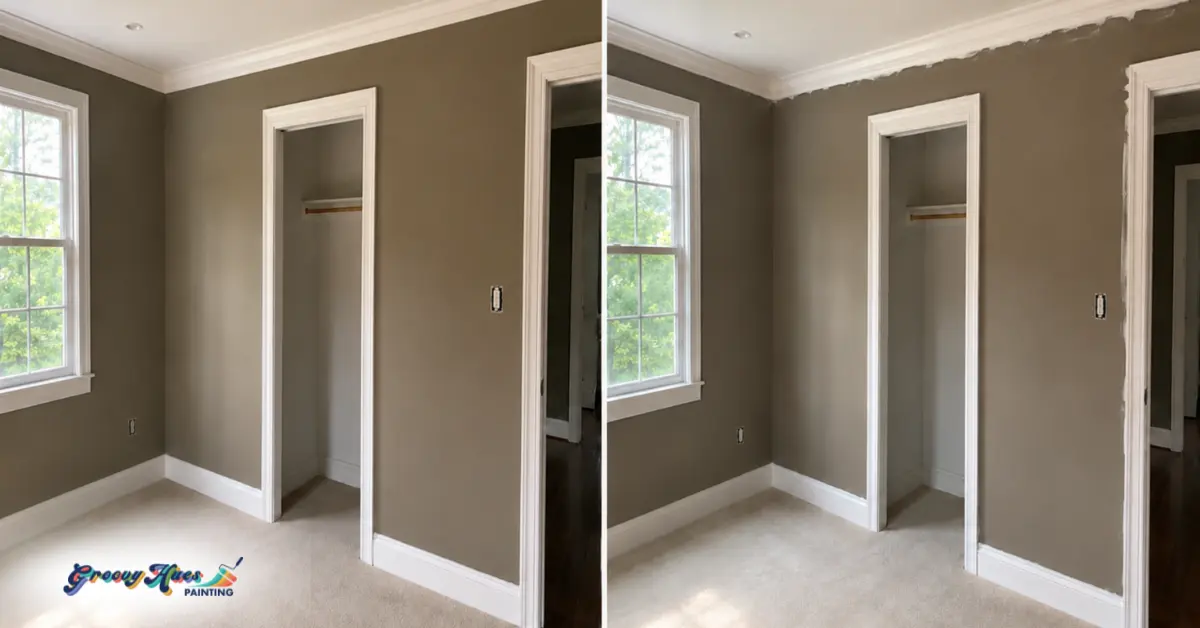
You just painted your living room and stand back to admire your work, but something feels off. The walls look great, but the baseboards are textured with brushstrokes, the crown moulding is uneven, and the door frame has dried globs of paint around the edges.
Trim is where most DIY paint jobs unravel. Walls are forgiving — a slightly uneven edge disappears into the room. Trim is not. Every drip, brush mark, and bleed line lives at eye level, in the light, where anyone who walks in will see it. Getting it right is the difference between a room that looks professionally done and one that looks unfinished.
This guide walks through how to paint trim cleanly — from choosing the right paint and tools to the step-by-step process and the mistakes that undo otherwise solid work. Trim painting is where most DIY paint jobs visibly fall short, and where Groovy Hues’ interior painting team delivers results that genuinely hold up.
Choosing the Right Paint for Trim
Clean, crisp trim work is what separates a room that looks professionally finished from one that looks like a weekend project. According to a Zillow report, homes with freshly painted trim and molding can sell for up to $2,000 more on average due to better visual presentation, and interior painting as a whole delivers an average ROI of 107%. The detail work matters, and trim is where that detail lives.
But trim paint is not wall paint. Using the wrong product is one of the most common reasons DIY trim jobs look flat, dull, or worn within a year.
Color strategy.
Bright white (in various undertones) remains the most popular trim color for good reason — it creates clean contrast that makes both the trim and the walls look more intentional. That said, matching trim to walls in the same or slightly deeper shade (color drenching, as it’s sometimes called) is a growing trend that can work beautifully in the right context. Whatever you choose, make sure your trim color has the same undertone family as your wall color — a cool-toned white against warm-toned walls will clash in ways that become more obvious once the paint dries.
Finish matters most.
For interior trim, semi-gloss and gloss finishes are the professional standard — and for good reason. They’re more durable, easier to wipe clean, and hold up against the scuffs, bumps, and cleaning cycles that baseboards and door casings endure. They also catch the light in a way that makes trim pop against a matte or eggshell wall, giving a room that layered, finished look. Flat or eggshell paint on trim will look cheap even when applied perfectly.
Buy quality paint.
This is not the place to cut corners. Premium interior trim paints from brands like Benjamin Moore, Sherwin-Williams, or Farrow & Ball flow more smoothly, level out better after brushing, and require fewer coats to achieve a uniform finish. Cheap paint on trim looks cheap. For an overview of how paint quality and color choices affect your home’s overall value, Groovy Hues’ guide on increasing home value through painting services is worth a read.
Tools You’ll Need
Having the right tools doesn’t guarantee a great result, but using the wrong ones almost guarantees a poor one.
- Angled sash brush (2–2.5 inches): The most important tool for trim work. The angled bristles allow precise cutting-in along edges and corners. Don’t use a flat brush or, worse, a foam brush — neither delivers the control trim work demands.
- Painter’s tape: For protecting walls and floors at trim edges. Investing in a quality tape (3M ScotchBlue or FrogTape) makes a real difference in how cleanly the tape pulls away without lifting paint.
- Drop cloths: Canvas drop cloths are more durable and less slippery than plastic sheeting — essential for protecting floors, especially around baseboards.
- Sandpaper (120–220 grit) and tack cloth: For smoothing surfaces between coats and wiping away dust before painting.
- Caulk and caulking gun: For filling gaps between trim and walls before painting — one of the single most impactful steps most DIYers skip.
- High-quality semi-gloss or gloss paint: Don’t compromise here.
A note worth making: quality brushes alone make a significant difference. Professional painting crews use tools that most homeowners never invest in, and the results reflect that.
How to Prep for Trim Painting
Prep is where most DIY trim jobs fail before the first coat is ever applied. Painting over dirt, grease, peeling paint, or moisture issues leads to poor adhesion and early failure. Cracking, bubbling, and flaking can appear within months, requiring repainting far sooner than expected. Professional painters invest significant time in prep — it’s what allows a finish to last years instead of seasons.
-
Clean the surface thoroughly.
Trim collects grease, dust, and grime over time — especially around door casings and baseboards near high-traffic areas. Wipe everything down with a degreasing cleaner or TSP substitute and let it dry completely before doing anything else.
-
Repair damage.
Fill nail holes, dings, and small cracks with spackling compound or wood filler. Let it cure fully, then sand smooth. Skipping this step means every imperfection becomes more visible under a fresh coat of semi-gloss paint, which amplifies surface texture rather than hiding it.
-
Sand for adhesion and smoothness.
Lightly sand existing painted trim with 120-grit sandpaper to scuff the surface and improve adhesion. If the existing paint is glossy (as trim paint should be), this step is non-negotiable — paint won’t bond well to a slick surface. Finish with 220-grit for a smooth base, then wipe away all dust with a tack cloth.
-
Caulk the gaps.
The gap between trim and wall — and between trim pieces at corners — is where amateur paint jobs reveal themselves most clearly. Apply a thin, smooth bead of paintable latex caulk, tool it with a wet finger, and let it dry before painting. This single step does more for the finished look than almost anything else.
-
Tape the edges.
Apply painter’s tape carefully to the wall surface along the top edge of baseboards and to floors along the bottom edge. Press the tape edge firmly with a putty knife for a clean seal that prevents paint from bleeding underneath.
Want to avoid all of the prep work? Contact us online or find a Groovy Hues near you to have a professional painting contractor get the job done right.
Step-by-Step: How to Paint Trim Cleanly
With prep done correctly, the painting itself is more straightforward — but technique still matters.
-
Prime if needed.
If you’re painting over raw wood, making a significant color change, or painting over a stained surface, prime first. A shellac-based or water-based primer appropriate for your surface creates the foundation that allows topcoat paint to look uniform and adhere properly.
-
Cut in with an angled brush.
Load the brush about halfway up the bristles — not all the way to the ferrule — and apply paint in long, smooth strokes following the direction of the trim. Work in manageable sections of 2–3 feet at a time. The goal is a thin, even coat, not heavy coverage in one pass.
-
Maintain a wet edge.
The most common cause of visible lap marks on trim is letting one section dry before connecting the next. Work quickly enough that each new stroke overlaps into still-wet paint. If paint on trim starts to feel tacky, stop and let it dry fully rather than trying to brush into it — dragging a brush over partially dried paint creates ridges and marks that are very difficult to fix.
-
Apply thin coats and allow full drying time.
Two thin coats will always look better than one thick one. Thick coats sag, drip, and dry with an uneven sheen. Follow the paint manufacturer’s recommended recoat time — rushing this is one of the most common reasons second coats look streaky.
-
Pull tape while the paint is slightly tacky.
Waiting until the paint is fully cured makes it more likely to chip or peel at the tape edge. Pull slowly at a 45-degree angle back over itself for the cleanest possible line.
Avoiding Common Mistakes When Painting Trim
Even experienced DIYers run into these, and on semi-gloss trim, they’re especially hard to hide.
Skipping sanding between coats.
A light sand with 220-grit between coats removes dust nibs and brush marks, and gives the next coat something to bite into. It takes ten minutes and makes a visible difference in smoothness.
Using low-quality brushes.
Bargain brushes leave bristle marks, shed bristles into wet paint, and hold significantly less product — meaning more trips back to the paint can and more opportunities for lap marks. A quality angled sash brush is a $15–$20 investment that changes the outcome.
Overloading the brush.
Too much paint on the brush leads to drips, sags, and buildup in corners. Less is more — thin, controlled coats are the goal.
Not removing the tape at the right time.
Tape pulled too late chips the paint edge; tape left on too long bonds to the paint surface. The window is when the paint is dry to the touch but not yet fully cured.
Brushing over partially dried paint.
Once the trim paint starts to set, leave it alone. Going back over it with a brush pulls up the surface and creates ridges. Let it dry fully and sand lightly if needed before the next coat.
Bonus Tips for a Professional Finish
A few details that separate good trim work from great trim work:
- Caulk before painting, not after. Caulking gaps before the topcoat gives you a seamless, unified surface that looks like the trim and wall are part of the same intentional composition.
- Know whether to paint trim before or after walls. For new construction or full repaints, painting trim first and then cutting walls in against it is the more efficient sequence — it’s easier to cut a wall color neatly against trim than to paint trim neatly against a finished wall. For touch-ups or isolated trim refreshes, wall-first makes more sense.
- Use a paint shield for touch-ups. A metal paint guard held against the wall while cutting in along the baseboard can substitute for tape on quick touch-up jobs — but only with a very steady hand. For full paint jobs, tape is always worth the time.
- Explore top interior color trends if you’re reconsidering your trim color as part of a broader refresh — the right trim color choice can transform the way an entire room reads.
When to Call a Professional for Interior Trim Painting
Trim painting is genuinely one of the most technically demanding interior painting tasks — and it shows when it’s not done well. More than half of homeowners who attempted DIY projects spent more than anticipated due to errors, and 47% admitted they underestimated the time commitment required. For trim specifically, the gap between a solid professional result and a DIY attempt is often the most visible anywhere in a room.
- Intricate molding, crown molding, or wainscoting. The more complex the profile, the harder it is to achieve smooth, drip-free coverage without the right tools and technique. Crown molding in particular requires consistent pressure and brush angle that takes real practice to develop.
- Large surface areas or full-home projects. What looks like a straightforward weekend project has a way of expanding. Many DIY projects start with the best intentions, but prep can be easy to rush — and a finish that looks “off,” even if you used good paint, is the typical result. Professional crews complete most interiors in a few days; DIY whole-house trim projects can stretch over multiple weeks.
- When you want a guaranteed result. Professional painters bring product knowledge, proper prep, and application technique that consistently deliver what paint chips and YouTube tutorials promise but rarely produce. Professional painting delivers long-lasting, even coverage backed by a warranty — while uneven coats, drips, or peeling are common with DIY, especially without a proper primer.
- When the stakes are high. If you’re preparing to list your home, hosting an event, or simply want a result you’ll be proud of every time you walk in the room, the professional route eliminates the risk of a result you have to live with.
Groovy Hues’ painting services cover everything from isolated trim refreshes to full interior repaints. Find a location near you to get started or call our team with questions about our process and pricing.
Frequently Asked Questions About How to Paint Trim
Should I use semi-gloss or gloss paint on interior trim?
Semi-gloss is the most common choice for interior trim because it’s durable, easy to clean, and provides a subtle contrast against walls. Gloss paint creates a shinier, more dramatic finish but highlights surface imperfections more easily.
Do I need to sand trim before painting?
Usually, yes. Light sanding helps new paint adhere properly, especially over glossy existing finishes, and creates a smoother final result.
Can I skip primer on trim?
Sometimes. Primer may not be necessary when repainting trim in a similar color, but it’s recommended for raw wood, repairs, stains, or major color changes.
How long should I wait between trim paint coats?
Most water-based trim paints require 2–4 hours between coats, though drying times vary by product and conditions. Following the manufacturer’s instructions helps prevent streaking and uneven coverage.
Why does trim paint show brush marks?
Brush marks are often caused by thick paint, overloaded brushes, or painting over partially dried areas. Using quality brushes, thin coats, and long smooth strokes helps create a cleaner finish.
Is hiring a professional for trim painting worth it?
Often, yes. Detailed trim work, crown molding, and wainscoting require precision and preparation. Professional painters typically deliver smoother, more consistent results with less cleanup and rework.
The Bottom Line When Learning How to Paint Trim
Trim can make or break the visual appeal of a room. Done well, it’s the detail that pulls everything together — the frame around the walls, the clean line at the ceiling, the crisp edge at the floor. Done poorly, it’s the first thing visitors notice and the last thing you want to think about every morning.
Getting it right takes the right paint, the right tools, meticulous prep, and patient technique. For homeowners who want to take it on themselves, this guide gives you the best possible starting point. For those who want a guaranteed result — clean lines, even coverage, and a finish that lasts — call Groovy Hues at (844) 394-8660 or contact us online for a consultation. Find your nearest location here and let’s talk about what your trim — and your rooms — could look like.