

Deck Paint vs. Stain: Which Is Best for Your Outdoor Space?
Your deck takes a beating — sun, rain, foot traffic, furniture, and everything in between. The finish you choose isn’t just about looks; it’s the primary barrier between bare wood and the kind of moisture damage and UV degradation that turns a beautiful deck into a costly repair project. Whether you’re finishing a new deck for the first time or refreshing an aging one, the choice between paint and stain will shape how your deck looks, how long it lasts, and how much work it takes to maintain.
This guide breaks down the key differences between deck paint vs. stain, including appearance, durability, cost, and climate considerations, so you can make the right call for your home.
Why Keeping Up with Your Deck Matters
It’s easy to put off deck maintenance. But the financial case for staying on top of it is compelling: a well-executed exterior paint job can increase a home’s value by 2–5%, while a neglected deck tells the opposite story.
Even minor deck damage can sometimes cost hundreds or thousands of dollars. Check out the typical deck repair or replacement cost for your area, or call Groovy Hues for a free consultation.

The good news: a properly applied coat of paint or stain is one of the most cost-effective ways to prevent that escalation. It seals the wood against moisture, blocks UV degradation, and keeps your deck looking like it belongs to a home that’s been cared for. Given that 97% of real estate professionals say curb appeal matters to attracting buyers, your deck’s condition is never just a personal preference — it’s an investment.
What’s the Difference Between Deck Paint vs. Stain?
Before comparing pros and cons, it helps to understand what each product actually does to wood.
Deck Paint
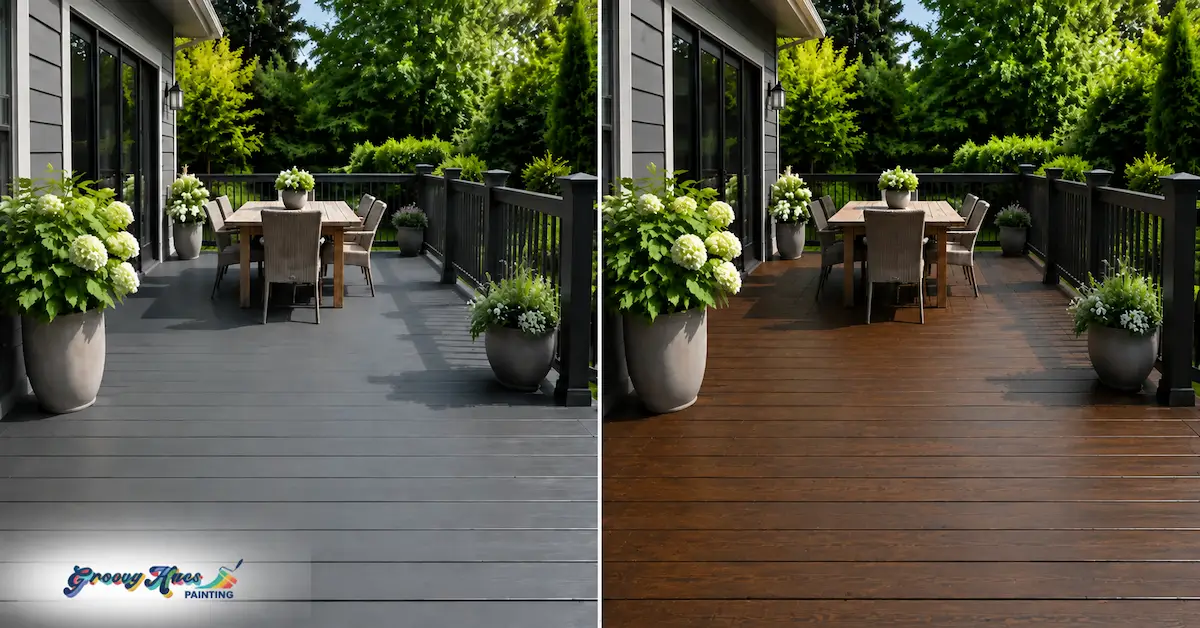
Deck paint sits on top of the wood surface, forming a solid, opaque film that completely covers the grain. It creates a smooth, uniform finish available in virtually any color. Because it forms a coating rather than penetrating the wood, paint is more susceptible to peeling, chipping, and bubbling when moisture gets underneath, which is inevitable over time as wood expands and contracts with temperature and humidity changes.
Deck Stain
Deck stain works differently: it penetrates the wood fibers rather than coating the surface. This means it moves with the wood as it expands and contracts, making it far more forgiving of moisture fluctuations. Stains come in a range of opacities:
- Clear or transparent stains offer minimal color but maximum grain visibility; they require the most frequent reapplication (often annually)
- Semi-transparent stains add subtle color while still showing wood grain — the most popular choice for natural-looking decks
- Semi-solid stains provide more color coverage while retaining some grain texture
- Solid stains function similarly to paint in appearance but still penetrate the wood rather than coating it
The finish type you choose determines how much of the wood’s natural character shows through — and how often you’ll need to reapply.
Pros and Cons of Painting a Deck
Deck paint has made significant advances in recent years — modern exterior deck formulas are more UV-stable, flexible, and durable than older generations. But paint is still a coating, and coatings have trade-offs.
Pros:
- Bold, uniform color. Paint offers an essentially unlimited color palette, making it the right choice when you want to make a design statement or match your home’s exterior precisely.
- Excellent UV protection. A quality paint film shields wood fibers from sun damage effectively, making it a strong option in high-sun climates.
- Covers imperfections. Cracked boards, uneven repairs, old staining, and surface blemishes disappear under a solid coat of paint — a real advantage on older decks that have seen better days.
- Long-lasting when properly applied. A high-quality paint job on a well-prepped deck can last 5–10 years, and in ideal conditions, over a decade before needing recoating.
Cons:
- Chips, peels, and bubbles over time. Because paint sits on the surface, moisture that works its way into the wood from below has nowhere to go — and eventually forces the coating up. Without consistent maintenance, painted decks can look worse than unpainted ones once deterioration begins.
- Hides the wood grain completely. If you value the natural warmth and character of wood, paint isn’t your friend.
- Requires more surface prep. For paint to adhere properly, the surface needs to be thoroughly cleaned, sanded, and often primed. Skipping steps leads to early failure.
- Difficult to reverse. Once you’ve painted a deck, switching back to stain later is a significant undertaking — it requires stripping all the paint down to bare wood, which is labor-intensive and expensive. This is one of the most important reasons to get professional advice before committing.
Pros and Cons of Staining a Deck
Stain is the more commonly recommended choice for wood decks — and for good reason. Its penetrating formula works with the wood’s natural behavior rather than against it.
Pros:
- Showcases natural wood grain. Semi-transparent and transparent stains let the character of the wood show through, maintaining the warm, natural look most homeowners want from a wood deck.
- Easier to apply and touch up. Because stain penetrates rather than coats, touch-ups blend more seamlessly. There’s no risk of visible lap marks or the peeling edges you see with failing paint.
- Moves with the wood. Stain’s breathable, penetrating finish accommodates the natural expansion and contraction of wood with seasonal moisture changes, making it especially resilient in humid or wet climates.
- More forgiving of moisture fluctuations. Stain doesn’t trap moisture between itself and the wood the way paint can — which significantly reduces the risk of rot and decay beneath the surface.
Cons:
- More frequent reapplication. This is the biggest drawback. Depending on transparency, deck stains need reapplication every 2–4 years — sometimes annually for clear stains. Paint typically lasts twice as long between coats.
- Less color variety. While stain color options have expanded beyond traditional browns, the palette is still narrower than paint.
- Won’t hide imperfections. Stain enhances wood’s natural look — including its flaws. Patches, cracks, and surface damage that paint would cover are still visible under a stain.
- Less surface protection in extreme sun. In very high-UV environments, solid or semi-solid stains hold up better than transparent ones, but even the best stains may not match paint’s UV shielding in sun-drenched climates.
How to Choose Between Deck Paint vs. Stain
There’s no universal right answer — the best choice depends on your situation. Here are the key factors to weigh:
- Aesthetic preference. Do you want the natural beauty of the wood to show, or are you going for a bold, coordinated color? If the grain matters to you, stain. If color and uniformity are the priority, paint.
- Deck condition and age. Newer decks with clean, even wood are excellent candidates for stain. Older decks with surface damage, discoloration, or uneven repairs are better suited to paint, which can conceal those imperfections and refresh the look uniformly.
- Wood type and prior treatments. Some wood species — especially pressure-treated lumber — absorb stain better than paint. If your deck has been previously painted, adding another coat of paint is far easier than switching to a stain. This is another situation where professional guidance before starting saves significant time and money.
- Your climate. In wetter, more humid regions, stain’s breathable finish helps prevent moisture from becoming trapped and causing rot beneath the surface. In consistently sunny, high-UV climates, paint’s solid film provides stronger UV protection — though semi-solid or solid stains are a strong competitor here too. Check out Groovy Hues’ guide on how often to stain your deck for climate-specific guidance.
- Maintenance commitment. If you want to think about your deck finish as little as possible, paint’s longer recoat interval (5–10 years) is appealing — but when it does need attention, the prep work is significant. Stain requires more frequent reapplication every 2–4 years, but each touch-up is simpler and faster.
- Slip resistance. Paint can create a smoother, more slippery surface when wet — a real safety consideration for decks that get regular rain exposure or are near a pool. If you go with paint, look for formulas with a built-in non-slip additive, or ask your painter about adding one. Stain’s penetrating finish tends to leave more of the wood’s natural texture intact.
Professional Help or DIY?
Surface prep is the single most important factor in how long any deck finish lasts — and it’s where DIY projects most often fall short. Proper preparation involves power washing to remove dirt, mildew, and old product; sanding to open the wood grain and smooth rough spots; and allowing adequate dry time before applying any finish. Skipping or rushing any of these steps leads to early adhesion failure, regardless of how good the product is.
Beyond prep, product selection matters enormously. Not all deck paints and stains are created equal, and the right choice depends on your wood species, the existing finish, your climate, and your color goals. A professional painter — like the team at Groovy Hues — can assess all of those variables and recommend a product that will actually perform for your specific situation.
Perhaps most importantly: if you’re considering switching from paint to stain (or vice versa), get expert advice before you start. Removing an existing paint film down to bare wood is a major undertaking, and attempting it without the right tools and technique often leads to an uneven surface that neither paint nor stain can properly adhere to. Getting it right the first time is always less expensive than fixing a failed DIY attempt.
Groovy Hues offers deck and fence staining and exterior painting services, which include preparation, product selection, and application — with results that last. Find a location near you to get started or give us a call!
Frequently Asked Questions
Still have questions about deck paint vs. stain? We’ve got answers! Browse our FAQ or find a painting contractor near you to ask your local Groovy Hues expert.
Can I paint over existing deck stain?
Usually, yes. Solid stains can often be painted over after cleaning and sanding. Penetrating oil-based stains may require additional prep or weathering before paint will properly adhere.
Can I stain over existing deck paint?
No. Stain must penetrate the wood, and existing paint blocks absorption. To switch from paint to stain, the deck typically needs to be fully stripped and sanded first.
How long does deck stain last compared to paint?
Deck stain generally lasts 2–4 years, depending on the product type and weather exposure. Deck paint can last 5–10 years with proper preparation and maintenance.
What’s the best finish for a new deck?
Most new pressure-treated decks should dry for 6–12 months before finishing. Penetrating stains are a popular choice because they protect the wood while preserving its natural appearance.
Does deck finishing increase home value?
Yes. A freshly painted or stained deck improves curb appeal and helps signal proper home maintenance, which can positively influence buyer perception and resale value.
The Finishing Coat
Paint and stain each have a legitimate place in deck finishing — the right choice comes down to your deck’s condition, your aesthetic preferences, your climate, and how much maintenance you want to take on. Paint offers longevity and color range; stain offers a natural look and easier touchups. Neither choice is wrong — but making that choice without the right information (or with the wrong products and prep) is where things go sideways.
The Groovy Hues team helps homeowners navigate exactly these decisions every day — with professional prep, honest product recommendations, and an application that holds up. Call us at (844) 394-8660 for a free consultation, or contact us online, and we’ll help you figure out exactly what your deck needs.