

Satin vs, Semi-Gloss Paint: How to Choose the Right Sheen for Every Space
The main difference between satin vs. semi-gloss paint is shine and toughness. Satin has a soft, pearl-like glow that hides more flaws, while semi-gloss is shinier, harder, and easier to scrub. Use satin on walls in busy or humid rooms, and save semi-gloss for trim, doors, cabinets, and surfaces that take a beating.
Both sheens sit in the middle of the paint finish scale, which is why they get mixed up so often. Pick the right one for each surface and your paint job looks polished and lasts. Pick the wrong one and you may end up with glare on your walls or scuffs on your trim.
Key Takeaways
- Satin has a soft, pearl-like glow and hides more surface flaws than semi-gloss.
- Semi-gloss dries to a harder, shinier film that handles moisture, grease, and frequent scrubbing.
- Use satin on walls in busy or humid rooms, and semi-gloss on trim, doors, cabinets, and baseboards.
- Satin walls with semi-gloss trim is a classic pairing that gives each surface the sheen it needs.
What Is Satin Paint?
Satin paint has a low-to-medium sheen with a smooth, velvety glow. It reflects more light than eggshell but far less than semi-gloss. That balance gives walls a soft, finished look while still standing up to fingerprints, scuffs, and regular wipe-downs.
What Is Semi-Gloss Paint?
Semi-gloss paint has a noticeable shine and dries to a hard, slick film. That hardness makes it one of the most durable and easiest-to-clean finishes you can buy. It shrugs off moisture, grease, and frequent scrubbing better than satin.
What’s the Difference Between Satin and Semi-Gloss?
Satin and semi-gloss differ in how much light they reflect, how tough the dried film is, and how much they reveal about the surface underneath. MPI, the organization behind many professional paint standards, sorts finishes into seven gloss levels, from Gloss Level 1 (flat) to Gloss Level 7 (high gloss). Satin and semi-gloss both land in the middle of that scale, with semi-gloss on the shinier side.
Satin vs. Semi-Gloss at a Glance
| Factor | Satin | Semi-Gloss |
|---|---|---|
| Shine | Soft, pearl-like glow | Noticeable, reflective shine |
| Durability | Good | Very good |
| Washability | Wipes clean well | Handles frequent scrubbing |
| Hides Imperfections | Better | Worse; shows dents and patches |
| Brush and Roller Marks | Can show lap marks if rushed | Shows uneven strokes and drips |
| Best For | Walls in busy or humid rooms, exterior siding | Trim, doors, cabinets, baseboards |
Appearance and Shine
Satin looks soft and modern on large surfaces, so walls read as smooth rather than shiny. Semi-gloss catches the light, which makes crisp lines on trim and doors pop. On a full wall, though, that shine can feel like glare, especially in rooms with big windows.
Durability and Cleaning
Semi-gloss wins on toughness. Its harder film resists moisture and stands up to scrubbing, so it’s ideal where hands, shoes, and splashes hit most often. Satin still cleans up well with a damp cloth, but heavy scrubbing can burnish the finish over time.
Hiding Imperfections
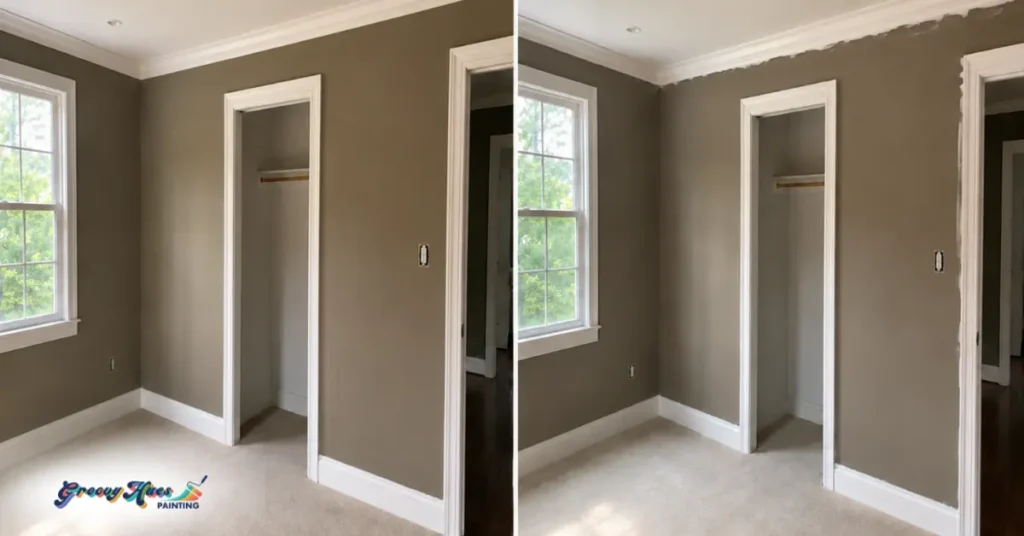
The more a paint shines, the more it shows what’s underneath. Satin forgives small dents, patches, and uneven drywall. Semi-gloss highlights every bump, so the surface needs careful patching and sanding first.
Application and Touch-Ups
Both sheens reward a careful hand. Satin can show lap marks where fresh paint overlaps paint that has started to dry, so painters keep a wet edge as they work. Semi-gloss shows drips and uneven strokes, and touch-ups on either sheen can stand out if the original paint has aged.
Want help choosing the right sheen and shade for your space? Schedule a free consultation with Groovy Hues.
When Should You Use Satin vs. Semi-Gloss?
Use satin where you want durability without shine, and semi-gloss where a surface gets touched, bumped, or splashed every day. Here’s how that plays out around your home.
Walls
Satin is the better pick for walls in kitchens, bathrooms, hallways, and kids’ rooms because it cleans easily without glare. For calmer spaces like adult bedrooms and formal living rooms, a lower sheen like eggshell may suit you even better. Our room-by-room guide to paint finishes covers every option.
Trim and Baseboards
Semi-gloss is the standard for trim and baseboards. These surfaces take kicks from shoes and bumps from vacuums, and semi-gloss wipes clean in seconds. Satin trim works if you want a softer, more modern look, but expect to clean it more carefully. For a crisp result, see our tips on how to paint trim.
Doors and Cabinets
Interior doors and cabinets get handled constantly, so semi-gloss is usually the right call. It creates a hard surface that resists fingerprints and grease. If you’re thinking about a cabinet refresh, Groovy Hues’ cabinet painting services cover kitchens, bathrooms, and built-ins.
Bathrooms
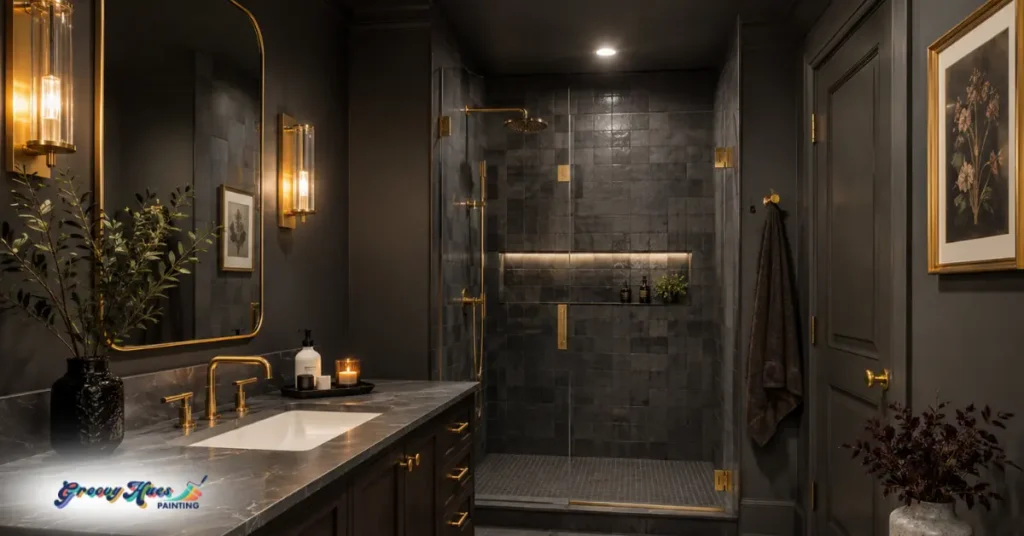
Satin works well on bathroom walls when the room has a good exhaust fan. In small or poorly ventilated bathrooms, semi-gloss is the safer bet because it handles lingering moisture better. Either way, use semi-gloss on bathroom trim and vanities.
Kitchens
Satin is a strong choice for kitchen walls since it resists stains without looking too shiny. Behind the stove or sink, where splatters happen most, semi-gloss adds extra protection.
Exteriors
Outdoors, the same logic applies with exterior-grade paint. Satin suits siding because it sheds dirt and hides surface texture. Semi-gloss makes trim, shutters, and front doors stand out and holds up to frequent handling. Learn more about Groovy Hues’ exterior painting services.
Can You Use Satin and Semi-Gloss in the Same Room?
Yes, and it’s a classic combination. Satin on the walls with semi-gloss on the trim gives each surface the sheen it needs. The contrast in sheen frames the room and makes trim look crisp, even when it’s the same color as the walls. If you like that monochrome look, here’s how to paint walls and trim the same color.
Can You Paint Semi-Gloss Over Satin, or Satin Over Semi-Gloss?
Yes, as long as the surface is prepped correctly. Paint struggles to grip a glossy surface, so semi-gloss should be cleaned and lightly scuff-sanded before any new coat goes on. Going from satin to semi-gloss is simpler, but the wall still needs to be clean and dry. When the color change is dramatic, a primer coat helps the new sheen look even.
Satin vs. Semi-Gloss FAQs
Get the Perfect Sheen and Shade With Groovy Hues
Choosing between satin and semi-gloss is one decision. Matching the right sheen to every wall, door, and trim line across your home, in a color you love, is a bigger project. A professional painting company takes the guesswork out and gets the job done quickly and cleanly.
- A sheen and color plan for every surface, built during your free consultation
- Professional-quality Sherwin-Williams paints, unless you request a different brand
- Proper prep, including minor repairs and priming as needed, so each sheen goes on smooth
- Projects that can start and finish in as little as 4 to 5 days from the time you connect, depending on the scope
- Cleanup and a final walk-through to confirm everything meets your expectations
- Fully licensed and insured crews, plus on-the-spot financing
Ready to Find Your Groovy Hue?
Find a painting contractor near you or call (844) 394-8660 to schedule your free consultation.