

Eggshell vs. Satin Paint: What’s the Difference (and Which Should You Pick)?
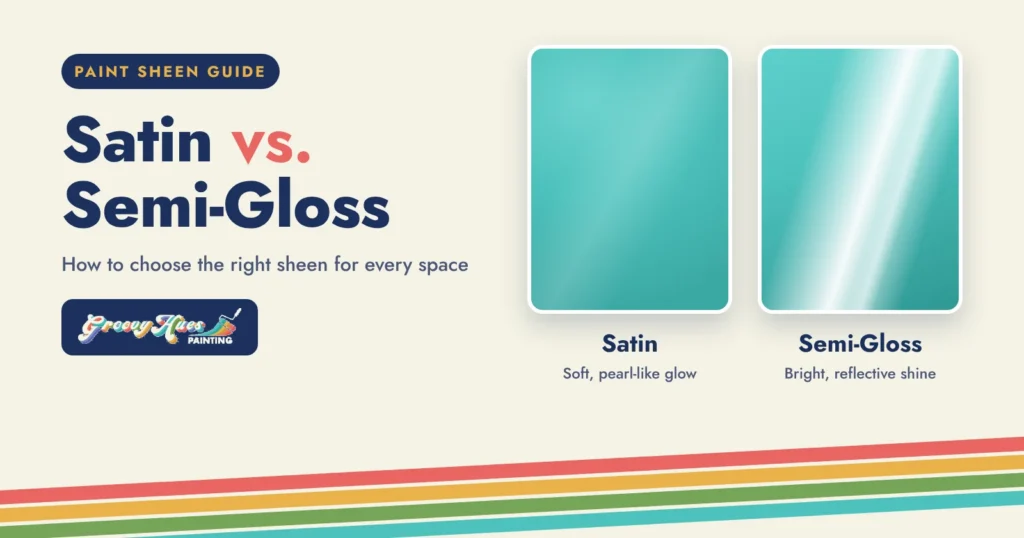
The difference in eggshell vs. satin paint comes down to a little extra shine and a little extra toughness. Eggshell has a soft, low luster that hides wall flaws and suits calm, low-traffic rooms. Satin is slightly shinier and more durable, so it handles kitchens, bathrooms, and busy hallways better.
The two finishes look so similar on a paint chip that many homeowners grab one at random. On a full wall, the gap is easier to see, and so is the gap in how each one holds up to daily life.
Key Takeaways
- Eggshell has a soft, low luster that hides wall flaws and suits calm, low-traffic rooms.
- Satin is slightly shinier and more durable, so it handles kitchens, bathrooms, and busy hallways better.
- Eggshell is more forgiving to apply and touch up, while satin can show lap marks.
- Many homes use eggshell in living spaces and satin in kitchens, baths, and hallways, changing sheens at natural breaks.
What Is Eggshell Paint?
Eggshell paint has a low sheen with a subtle glow, a lot like the surface of an actual eggshell. It sits just above flat and matte on the sheen scale. That small bump in shine makes eggshell much easier to wipe clean than flat paint, while it still hides minor dents and patches.
Eggshell is a common pick for living rooms, dining rooms, and adult bedrooms, where walls need to look good more than they need to survive scrubbing.
Is Eggshell the Same as Satin?
No. Eggshell and satin are neighbors on the sheen scale, but satin reflects more light and dries to a tougher film. Sherwin-Williams places both in the middle tier of sheens and notes that satin has a slightly higher sheen than eggshell. Some brands also sell in-between names like low-luster or pearl, so check the brand’s sheen chart before you buy.
Eggshell vs. Satin: Key Differences
Eggshell and satin differ in shine, durability, and how much they reveal about the wall underneath. MPI, the organization behind many professional paint standards, sorts finishes into seven gloss levels, from Gloss Level 1 (flat) to Gloss Level 7 (high gloss). Eggshell sits closer to the flat end, and satin sits a little closer to the glossy end.
Eggshell vs. Satin at a Glance
| Factor | Eggshell | Satin |
|---|---|---|
| Sheen | Low, soft luster | Low to medium, pearl-like glow |
| Durability | Moderate | Good |
| Washability | Handles gentle wiping | Handles regular cleaning |
| Moisture Resistance | Fair | Good |
| Hides Imperfections | Very good | Good |
| Best For | Living rooms, dining rooms, adult bedrooms | Kitchens, bathrooms, hallways, kids’ rooms |
Sheen and Look
Eggshell reads as nearly flat from across the room, with a gentle warmth up close. Satin has a visible glow that catches light from windows and lamps. That extra reflection can make colors feel a touch richer, but it can also add glare on walls that get strong direct sun.
Durability and Cleaning
Satin wins on durability. Its tougher film stands up to fingerprints, splashes, and regular wipe-downs. Eggshell cleans up fine with a soft, damp cloth, but scrubbing hard can leave shiny or dull spots on the wall.
Hiding Imperfections
Lower sheen means fewer visible flaws. Eggshell does a better job hiding nail pops, patches, and uneven drywall, which makes it a smart choice for older homes. Satin shows a bit more, so the wall needs careful patching and sanding before it goes on.
Application and Touch-Ups
Eggshell is more forgiving to apply and easier to touch up. Satin can show lap marks where wet paint overlaps paint that has started to dry, so painters keep a wet edge and finish one wall at a time. Touch-ups on satin are more likely to stand out, especially on older paint.
Still deciding? A Groovy Hues pro can help you match the right sheen and shade to each room.
When Should You Use Eggshell vs. Satin?
Use eggshell where looks matter most and traffic is light, and satin where walls get touched, splashed, or scuffed often. Here’s how that plays out room by room.
Living Rooms and Dining Rooms
Eggshell is the go-to here. It gives walls a soft, elegant look and hides minor flaws. If your living room doubles as a playroom or pet zone, satin will handle the extra wear better.
Bedrooms
Adult bedrooms see little wear, so eggshell keeps the room calm and cozy. Kids’ rooms are a different story, and satin makes it easier to wipe away crayon and sticky fingerprints.
Kitchens and Bathrooms
Satin is the better pick for kitchen and bathroom walls because it resists moisture and cleans up easily. In small or poorly ventilated bathrooms, consider stepping up to semi-gloss for even more protection.
Hallways, Entryways, and Mudrooms
These spaces take bumps from bags, shoes, and furniture all day. Satin keeps scuffs easy to wipe away, so walls look fresh longer.
Home Offices
Either works. Eggshell keeps glare off your screen, while satin adds durability if the office also serves as a homework or craft space.
Trim, Doors, and Ceilings
Neither eggshell nor satin is the usual choice here. Trim and doors typically get semi-gloss for durability, and ceilings get flat paint to hide seams. Our room-by-room guide to paint finishes covers those surfaces in more detail.
Can You Use Eggshell and Satin in the Same Home?
Yes. A common approach is eggshell in living spaces and satin in kitchens, baths, and hallways. The key is to change sheens at natural breaks, like a doorway or an inside corner, rather than in the middle of a continuous wall. Open floor plans look more cohesive when connected walls share one finish.
Can You Paint Satin Over Eggshell, or Eggshell Over Satin?
Yes, with the right prep. Clean the wall first, and lightly scuff-sand satin so the new coat grips well. The top coat sets the final look, so eggshell over satin will dry to an eggshell finish. A primer helps when you’re also making a big color change.
Eggshell vs. Satin FAQs
Pick Your Sheen, Then Let Groovy Hues Handle the Rest
Deciding between eggshell and satin is easier when someone can see your walls, your light, and how you use each room. A professional painting company turns that decision into a plan and gets the work done quickly and cleanly.
- A sheen and color plan for each room, built during your free consultation
- Professional-quality Sherwin-Williams paints, unless you request a different brand
- Wall prep, minor repairs, and priming as needed, so every finish goes on smooth
- Projects that can start and finish in as little as 4 to 5 days from the time you connect, depending on the scope
- Cleanup and a final walk-through to confirm everything meets your expectations
- Fully licensed and insured crews, plus on-the-spot financing
Ready to Find Your Groovy Hue?
Find a painting contractor near you or call (844) 394-8660 to schedule your free consultation.