




Spray Painting Services
Professional Spray Painting for Tampa Homes
There’s a reason professional painters opt to use spray equipment on certain surfaces. Spray application delivers a smooth, factory-like coat that brushes and rollers simply can’t replicate, especially on surfaces where the finish quality matters most. Additionally, spray painting doesn’t leave brush marks or roller texture, just a consistent seamless coat that adheres evenly. At Groovy Hues of Tampa, professional spray painting is a core service when it comes to delivering the finish quality that our customers have grown to expect.
Spray painting isn’t the right approach for every surface or every situation, meaning a professional result requires the knowledge of when to use spray painting or not. For surfaces where spray delivers a superior result, we’ll properly mask, contain, and use expert techniques to protect surrounding surfaces and produce clean edges throughout. Whether you’re refreshing the exterior of a South Tampa craftsman, refinishing cabinet doors in a Westchase kitchen, or painting a fence and gate system, our team brings the equipment and spray techniques that separate a professional finish from an amateur one.
The Surfaces Where Spray Painting Makes the Biggest Difference
Spray application produces its most meaningful result on surfaces where smoothness, consistency, and the ability to coat complex profiles evenly are the defining factors of a quality result. Here are the surfaces throughout Tampa homes where professional spray painting makes the clearest difference:
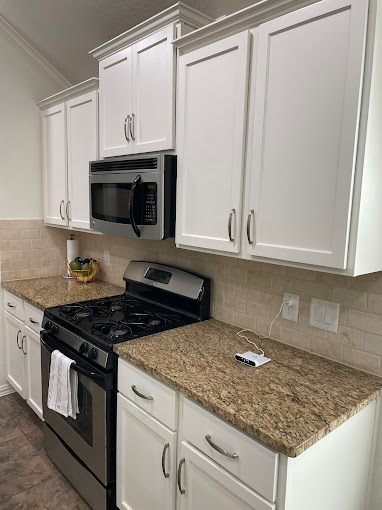
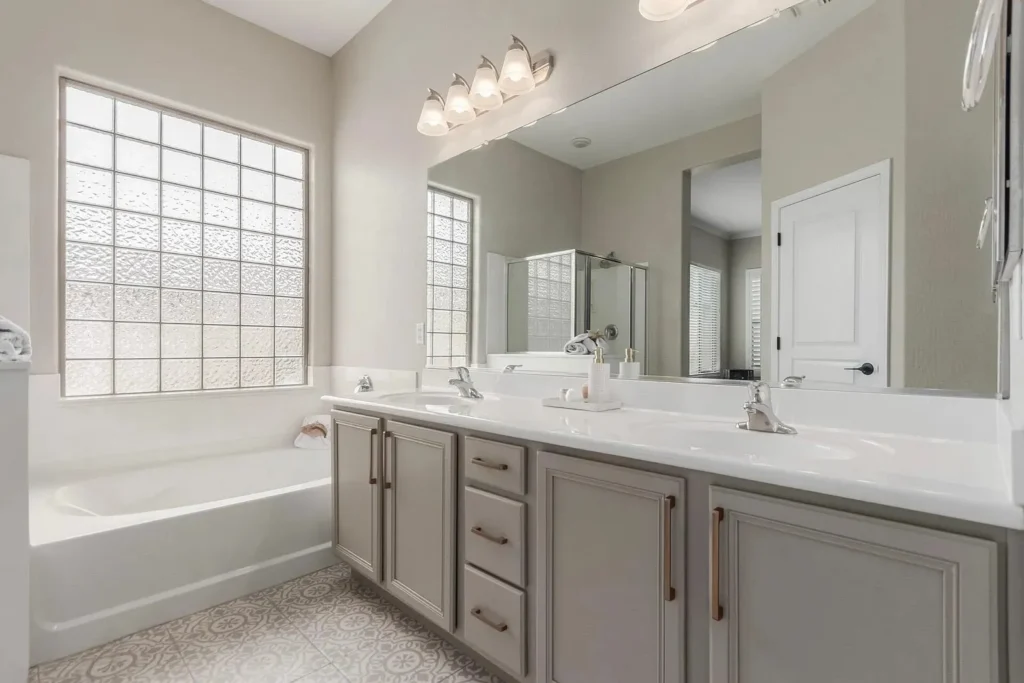
- Cabinet Doors & Faces: Cabinet painting is where spray application has a dramatic advantage over brush and roller. Spray application produces a smooth, factory-like finish, avoiding the texture and application marks that can come with traditional painting equipment. That’s why spray painting is the standard for all of our cabinet painting projects.
- Exterior Trim & Millwork: The detailed profiles, tight corners, and layered surfaces of exterior trim can be coated more efficiently and evenly with spray equipment. Spray reaches into profiles and shadow lines that brushwork has trouble covering, applying an even film thickness across complex geometries.
- Fences & Gates: Painting a wood or metal fences by brush is one of the more labor-intensive residential painting tasks, and often, it doesn’t even produce consistent results. Spray equipment covers fence boards, pickets, and rails efficiently and evenly, reaching the faces and spaces between in a way brush painting cannot.
- Exterior Siding: For newer constructions and full exterior repaints of homes with lap siding, board and batten, or other horizontal siding profiles, spray painting offers many benefits. Spray paint produces a consistent film thickness across every board face while being highly efficient.
- Popcorn & Textured Ceilings: Spray application is the most effective way to apply paint to heavily textured ceiling surfaces, reaching into the peaks and valleys of popcorn and skip-trowel textures. In Tampa’s older housing stock, spray application is regularly the right call for ceiling repaints.
Spray Painting vs. Brush & Roller — How We Decide
At Groovy Hues of Tampa, the choice between spray application vs. brush and roller isn’t based on what’s easier. It’s based on which produces the best results for the specific surface, situation, and finish requirement of each individual project.
When Spray is the Right Call
If a surface is smooth and the goal is a factory-like finish with no application texture, spray painting is a must. Cabinet doors, smooth garage doors, and smooth exterior trim all benefit from spray painting. Spray can also be used when surface geometry is too complex for brushes, such as fence pickets, detailed exterior millwork, and louvered surfaces. If you project requires painting large, open surface areas, spray application allows us to consistently and efficiently apply a coat of paint.
When Brush & Roller is the Right Call
If the painting area is occupied or partially occupied, has a surface texture that benefits from roller application, involves tight spaces with many adjacent surfaces, or we’re using a specific product that doesn’t spray efficiently, we recommend using brush and roller equipment. For example, interior rooms can’t reasonably contain spray application, especially if it’s a lived-in space with furniture, flooring, and belongings, so we always recommend using brushes and rollers.
Frequently Asked Spray Painting Questions
Is spray painting safe for occupied Tampa homes?
Spray painting in occupied spaces requires careful ventilation and product selection. We use low-VOC and zero-VOC products where spray work is being done in occupied or partially occupied spaces while ensuring appropriate ventilation. For projects where full containment and adequate ventilation aren’t practical, we schedule spray work in stages that allow residents to remain in unaffected parts of the home during work hours.
How does Tampa’s humidity affect spray painting results?
High humidity affects dry times, film formation, and in some cases the surface appearance of spray paint coatings. We monitor humidity levels and avoid spray painting when conditions fall outside the spray paint manufacturer’s recommended parameters. In Tampa’s summer months, this typically means scheduling exterior spray work in the morning before humidity peaks and around storm patterns.
How long does a spray painting project take compared to brush and roller?
Spray application is faster than brush and roller on open surfaces, but the preparation required for spray work is more involved. On larger projects, such as full exterior repaints, complete cabinet painting, and new construction work, spray painting’s speed advantage is significant, producing better results in less time.
Will spray painting leave overspray on surfaces I don’t want painted?
If your space is properly masked and contained, surfaces outside the project scope are safe. Every surface within the overspray zone is masked before spray painting begins, including windows, hardware, flooring, landscaping, and adjacent surfaces. When spray painting outside, we assess wind conditions before exterior spray work and adjust our approach and timeline when conditions make containment impractical.