

How the Texas Sun Affects Your Home’s Exterior Paint Color
Choosing an exterior paint color is a big decision. After all, you’re going to see that color every time you pull into the driveway.
But if you live in South Austin, there’s another factor you need to consider before settling on the perfect shade: the Texas sun.
Austin gets plenty of bright, intense sunlight, and that can affect exterior paint in ways homeowners don’t always anticipate. A color that looks perfect on a small paint chip—or even on another house—can look dramatically different when it’s covering an entire exterior under the Texas sky.
Sun exposure can also contribute to fading over time, making the right products, preparation, and color choices particularly important for South Austin homeowners.
Here’s what to consider before choosing your home’s next exterior color.
Why Does Exterior Paint Fade in the Sun?
Sunlight contains ultraviolet (UV) radiation. Over time, prolonged UV exposure can contribute to the breakdown of the pigments and binders that give exterior paint its color and durability.
The result?
Your once-rich exterior color can gradually become lighter, duller, or less vibrant.
And in South Austin, your home’s exterior may receive hours of strong sunlight day after day.
The amount of fading can depend on several factors, including:
- The direction your home faces
- How much direct sunlight each surface receives
- The paint color
- Paint quality
- The type of exterior surface
- Surface preparation
- The quality of the application
That’s one reason professional exterior painting involves considerably more than simply choosing a color and applying a few coats.
Dark Exterior Colors Can React Differently to Texas Heat
Dark exterior colors can create a striking look.
Deep charcoal, navy, black, dark brown, and other saturated colors have become popular choices for homeowners who want a dramatic, contemporary exterior.
But there’s a tradeoff worth considering.
Darker surfaces generally absorb more solar energy than lighter surfaces. On a hot, sunny Texas afternoon, that can mean greater heat buildup on exterior surfaces.
That doesn’t mean you can’t choose a dark exterior.
It means product selection, the surface being painted, and professional application become especially important.
Before committing to a dramatic dark color, talk with an experienced South Austin painting professional about whether it’s a good match for your home’s exterior materials.
Bright Sunlight Can Make Colors Look Lighter
Here’s another surprise.
The color you love inside a paint store may not look exactly the same outside your house.
Bright natural sunlight can make exterior colors appear lighter or more intense than expected. A subtle color undertone may also become much more noticeable once the paint is outdoors.
That beautiful off-white could suddenly look warmer than expected.
A subtle gray might reveal blue, green, or beige undertones.
And a bold color may become considerably bolder when it’s covering hundreds of square feet.
That’s why you shouldn’t make your final exterior color decision based solely on a tiny paint chip.
Test Your Paint Color on the Actual House
Before committing to an exterior color, consider testing it directly on your home.
Apply samples to areas where you can see them under different lighting conditions.
Then check those colors:
- In the morning
- Around midday
- In the late afternoon
- In direct sunlight
- In shade
- On different sides of the house
You may be surprised by how much the same color changes throughout the day.
Testing can be especially helpful when you’re deciding between several similar shades.
Pay Attention to Which Direction Your Home Faces
Not every side of your house receives the same amount of sunlight.
Some exterior surfaces may receive prolonged direct sun, while others spend much of the day in shade. That means the exact same paint color can look different depending on where you’re standing.
Don’t choose an exterior color after looking at only one wall.
Walk around the property.
Consider how the color interacts with sunlight and shade on every major side of the home before making the final call.
Consider the Colors You Aren’t Painting
Your siding isn’t the only color on your home’s exterior.
Before choosing paint, look at permanent or semi-permanent features such as:
- Roofing
- Brick
- Stone
- Driveways
- Walkways
- Garage doors
- Windows
- Gutters
- Landscaping
The best exterior palettes work together.
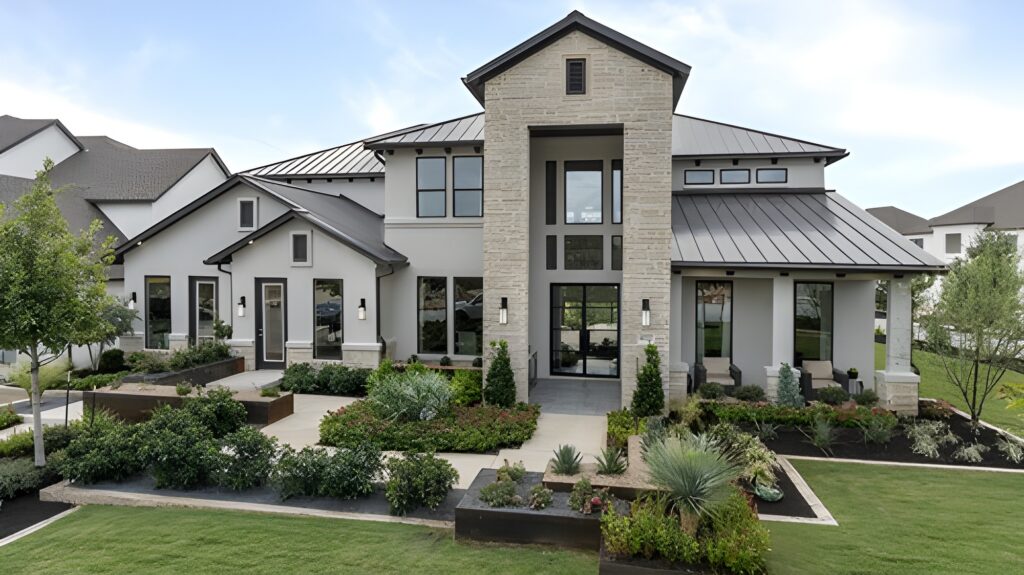
For example, if your home has prominent stonework with warm undertones, an extremely cool exterior color may create a combination you don’t love.
The goal isn’t simply to find a beautiful paint color.
It’s to find a beautiful paint color for your particular home.
Don’t Forget About Your Trim
Trim can completely change the way your primary exterior color appears.
A crisp light trim color can create strong contrast against darker siding, while a softer complementary shade can create a more subtle look.
You can also use color strategically on:
- Front doors
- Shutters
- Garage doors
- Fascia
- Porch features
- Architectural details
Sometimes you don’t need an unusual primary color to make your exterior stand out. A well-planned accent color can provide exactly the personality you’re looking for.
Is Lighter Paint Always Better for Austin Homes?
Not necessarily.
Lighter exterior colors can be attractive choices for sunny climates, but there’s no single color family that’s right for every South Austin home.
Your decision should consider your home’s architecture, exterior materials, surrounding properties, landscaping, personal preferences, and the amount of sun different surfaces receive.
The key is to choose intentionally rather than picking a color because it looked great in a photograph.
Paint Quality Matters Too
Color gets most of the attention, but the quality of the coating matters just as much.
South Austin’s climate can expose exterior surfaces to strong sun, heat, humidity, rain, and changing weather conditions. Groovy Hues Painting of South Austin uses professional preparation techniques and quality materials intended to produce an attractive, durable exterior finish.
Proper preparation is particularly important.
Painting over dirty, damaged, peeling, or poorly prepared surfaces can compromise the finished project regardless of how much you love the color.
A professional painting project may include cleaning, scraping, sanding, caulking, priming, and addressing surface imperfections before the finish coats are applied.
Signs Your Exterior Paint Has Had Enough Texas Sun
Not sure whether it’s time to repaint?
Walk around your home and look for:
- Noticeable fading
- Uneven color
- Peeling or flaking paint
- Cracking
- Bubbling
- Chalky-looking surfaces
- Exposed or deteriorating areas
- Trim that looks significantly more weathered than surrounding surfaces
Fading isn’t just an aesthetic issue. Your exterior paint also serves as a protective coating for the surfaces underneath it.
If your paint is showing significant wear, having the exterior evaluated can help you determine whether it’s time for a refresh.
Give Your South Austin Home a Color Built to Shine
Texas sunshine is one of the things we love about living in Austin.
Your home’s paint just has to live with a lot more of it.
Choosing the right exterior color—and pairing it with proper preparation, quality products, and professional application—can help you create a home that looks fantastic under that bright South Austin sky.
If your exterior is faded, worn, or simply ready for a completely new vibe, Groovy Hues Painting of South Austin is ready to help.
Our team provides professional exterior painting services throughout South Austin and surrounding communities, with free consultations to help you start planning your project.
Ready to find the right hue for your home? Contact Groovy Hues Painting of South Austin today at (512) 351-7073 to book your free consultation.